Social Media Marketing Guide
This Social Media Marketing Guide explains how audience understanding, platform selection, brand positioning, content strategy, publishing systems, engagement quality, community interaction, social media metrics, paid-social readiness, and business objectives connect. Use it as the main educational foundation, then continue to focused articles for strategy development, profile optimization, content calendars, and measurement workflows.
What is social media marketing?
Social media marketing is the planned use of social platforms to build visibility, communicate value, understand audiences, create useful content, support engagement, generate relevant actions, and contribute to wider business goals.
It connects audience research, platform selection, brand positioning, content pillars, publishing systems, community interaction, social media metrics, paid promotion, landing pages, and conversion paths. Effective social media marketing is not simply frequent posting.
This Guide provides the broad educational foundation. The Social Media Marketing Resource Hub organizes the related topic paths, while focused articles explain strategy development, Instagram optimization, content-calendar planning, and social media measurement.
Why random posting does not build a brand
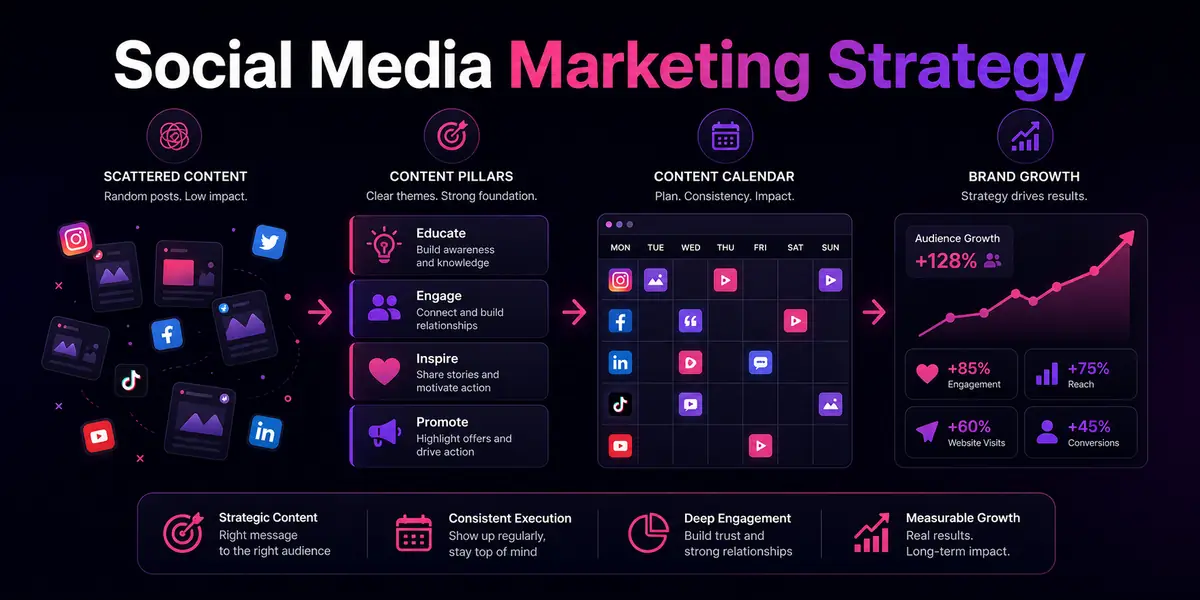
Random posting creates activity without a clear purpose. Content may receive occasional reach or engagement, but it becomes difficult to understand what the account represents, who it serves, or what action the audience should take next.
A structured approach connects audience needs, platform role, brand positioning, content pillars, formats, publishing frequency, engagement, and measurement. Each post should support a recognisable topic, customer journey, or communication objective.
Consistency does not mean publishing the same content repeatedly. It means maintaining a clear message, useful themes, recognisable presentation, and a reliable connection between the content and the wider business goal.
How Social Media Strategy Supports Business Growth
A social media strategy explains who the audience is, which platforms matter, what the account should communicate, which content themes support the goal, and how performance will be reviewed.
Social media can support recognition, website visits, enquiries, lead generation, customer communication, product discovery, recruitment visibility, community development, retargeting audiences, and paid-campaign learning. The correct role depends on the business model and customer journey.
Growth should not be measured only through followers. Relevant engagement, profile actions, qualified website visits, enquiries, conversions, audience feedback, and consistent brand recognition may provide more useful signals.
Audience and platform understanding
Audience understanding begins with the people the content is intended to reach. Important factors may include their goals, problems, questions, awareness level, preferred content formats, platform behaviour, and the action they may take after viewing the content.
Different platforms can serve different roles. Instagram may support visual storytelling, discovery, profile trust, Reels, carousels, Stories, and community interaction. Facebook may support Pages, local visibility, groups, messaging, events, and Meta Ads preparation.
LinkedIn may support professional positioning, implementation-based posts, networking, recruiter or business credibility, and industry conversations. A business does not need to use every platform equally.
Content pillars and content strategy
Content pillars are repeatable subject areas that connect audience interests with the brand’s expertise, offer, values, or customer journey. They help keep content consistent without making every post identical.
A useful content system may combine educational content, practical implementation, brand positioning, community interaction, proof or progress, product or service information, and conversion-supporting content.
The correct mix depends on the objective. An awareness account may prioritise discovery and education, while a service-focused account may also require trust, process explanations, practical examples, and clear enquiry paths.
Instagram profile optimization
An optimized Instagram profile should quickly explain who the account is for, what subject or value it provides, and what the visitor should do next. Important elements include the username, profile name, image, category, bio, link, contact options, highlights, pinned posts, and visual consistency.
Profile optimization cannot replace useful content, but it helps visitors understand the account after discovering a Reel, carousel, Story, comment, advertisement, or shared post. Continue to the Instagram Profile Optimization Checklist for the focused implementation workflow.
LinkedIn content positioning
LinkedIn content should connect professional positioning with useful observations, implementation experience, documented learning, practical systems, industry insights, and relevant conversations.
Strong LinkedIn positioning is not created by generic motivation or unsupported authority claims. It is strengthened by clear subject focus, credible examples, practical reflection, consistent engagement, and a profile that supports the same professional direction.
Core Social Media Marketing Areas

Brand Positioning
The message, expertise, value, audience, tone, visual consistency, and associations people connect with the account.
Engagement Quality
Relevant comments, replies, saves, shares, profile visits, direct messages, conversations, and audience feedback rather than empty interaction.
Content Calendar
Content pillars, formats, publishing schedule, campaign dates, responsibilities, review cycles, and consistent planning.
Funnel Support
Content that supports awareness, consideration, trust, website visits, enquiries, retargeting, conversion, and customer follow-up.
Social media content calendar
A content calendar turns content ideas into an organised publishing system. It may record the topic, content pillar, platform, format, objective, audience stage, caption status, creative requirement, publishing date, owner, call to action, and review status.
The calendar should remain flexible enough to respond to audience questions, campaign changes, platform trends, business priorities, and performance findings. Continue to Social Media Content Calendar for the focused planning process.
Engagement quality vs vanity metrics
Vanity metrics can look impressive without showing whether the content reached the right audience or supported a meaningful action. High views or follower counts do not automatically indicate trust, qualified traffic, leads, or business value.
Engagement quality considers who interacted, why they responded, whether the content was saved or shared, whether visitors viewed the profile or website, and whether the interaction supported the intended audience relationship.
Social media metrics that matter
Useful metrics depend on the objective. Awareness may involve reach, impressions, video views, frequency, and audience growth. Engagement may involve comments, saves, shares, replies, profile visits, and meaningful conversations.
Traffic and conversion objectives may involve link clicks, click-through rate, landing-page sessions, enquiries, leads, purchases, bookings, or assisted conversions. Reporting should explain what changed, why it may have changed, and what should be tested next.
Continue to Social Media Metrics for a focused framework covering awareness, engagement, traffic, website movement, enquiries, and monthly content review.
How social media supports SEO and performance marketing
Social media and SEO serve different discovery systems, but they can support each other. Social content can distribute website resources, reveal audience questions, strengthen brand recognition, generate relevant visits, and provide ideas for search-focused content.
Social media also supports performance marketing through audience learning, creative testing, message validation, retargeting preparation, landing-page alignment, and Meta Ads campaign development.
Use the SEO Resource Hub when the next question involves organic search visibility. Use the Performance Marketing Resource Hub when the subject involves paid media, campaign structure, tracking, analytics, landing pages, or CRO.
Common social media marketing mistakes
Common mistakes include posting without an objective, using every platform in the same way, copying trends without audience relevance, relying only on promotional content, ignoring profile optimization, publishing inconsistently, and failing to respond to meaningful interaction.
Other mistakes include measuring only follower growth, changing strategy too quickly, using weak calls to action, failing to connect social activity with the website or customer journey, and reporting numbers without explaining the next action.
Social media marketing checklist
A practical workflow includes defining the business objective, understanding the audience, assigning a role to each platform, clarifying the account positioning, selecting content pillars, planning formats, preparing a content calendar, establishing community-response practices, choosing metrics, and reviewing performance consistently.
After publishing, review reach, engagement quality, profile activity, website movement, audience feedback, enquiries, conversion signals, and content-production effort. Use the findings to decide what should be continued, improved, tested, or removed.
Related Articles and Hubs
Social Media Marketing Resource Hub
Explore content strategy, platform positioning, Instagram optimization, engagement, metrics, and brand visibility.
Open Hub
Performance Marketing Resource Hub
Connect social media content with Meta Ads, tracking, funnels, landing pages, and campaign optimization.
Explore Performance
Digital Marketing Blog
Read implementation-focused articles connected to SEO, content systems, and digital marketing workflows.
Read BlogSocial Media Marketing FAQ
What is social media marketing?
Social media marketing is the planned use of social platforms to build visibility, communicate value, understand audiences, publish useful content, support engagement, generate relevant actions, and contribute to wider business goals.
Why is social media strategy important?
A social media strategy connects audience needs, platform roles, content pillars, publishing systems, engagement practices, measurement, and business objectives. It reduces random posting and makes performance easier to evaluate.
Which social media metrics should a business track?
The correct metrics depend on the objective. Useful measures may include reach, impressions, saves, shares, comments, profile visits, link clicks, website sessions, enquiries, leads, conversions, engagement quality, and content-production efficiency.
How often should a business post on social media?
Posting frequency depends on the platform, available resources, content quality, audience behaviour, and business objective. A realistic and consistent schedule is usually more useful than publishing frequently without relevance or a sustainable process.
Social Media Marketing Foundation and Cluster Articles
Continue from this Social Media Marketing Guide into published articles on social strategy, Instagram profile optimization, and content calendar planning.
 Social Media Marketing
Social Media Marketing Strategy
See why random posting fails and how structured content planning builds visibility, trust, positioning, and brand growth.
Read Foundation Article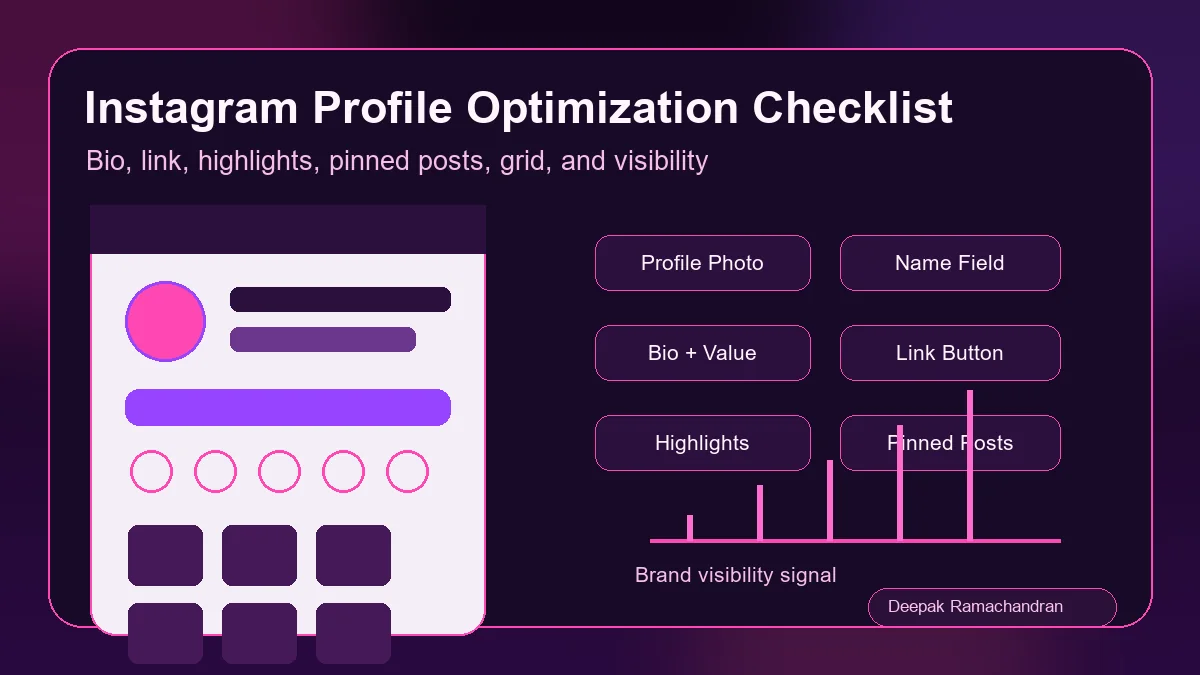 Social Media Marketing
Instagram Profile Optimization Checklist
Improve profile clarity with bio structure, CTA links, highlights, pinned posts, brand consistency, and metrics review.
Read Article Social Media Marketing
Social Media Content Calendar
Plan content pillars, formats, weekly publishing, batching, status tracking, and performance review for consistent visibility.
Read Article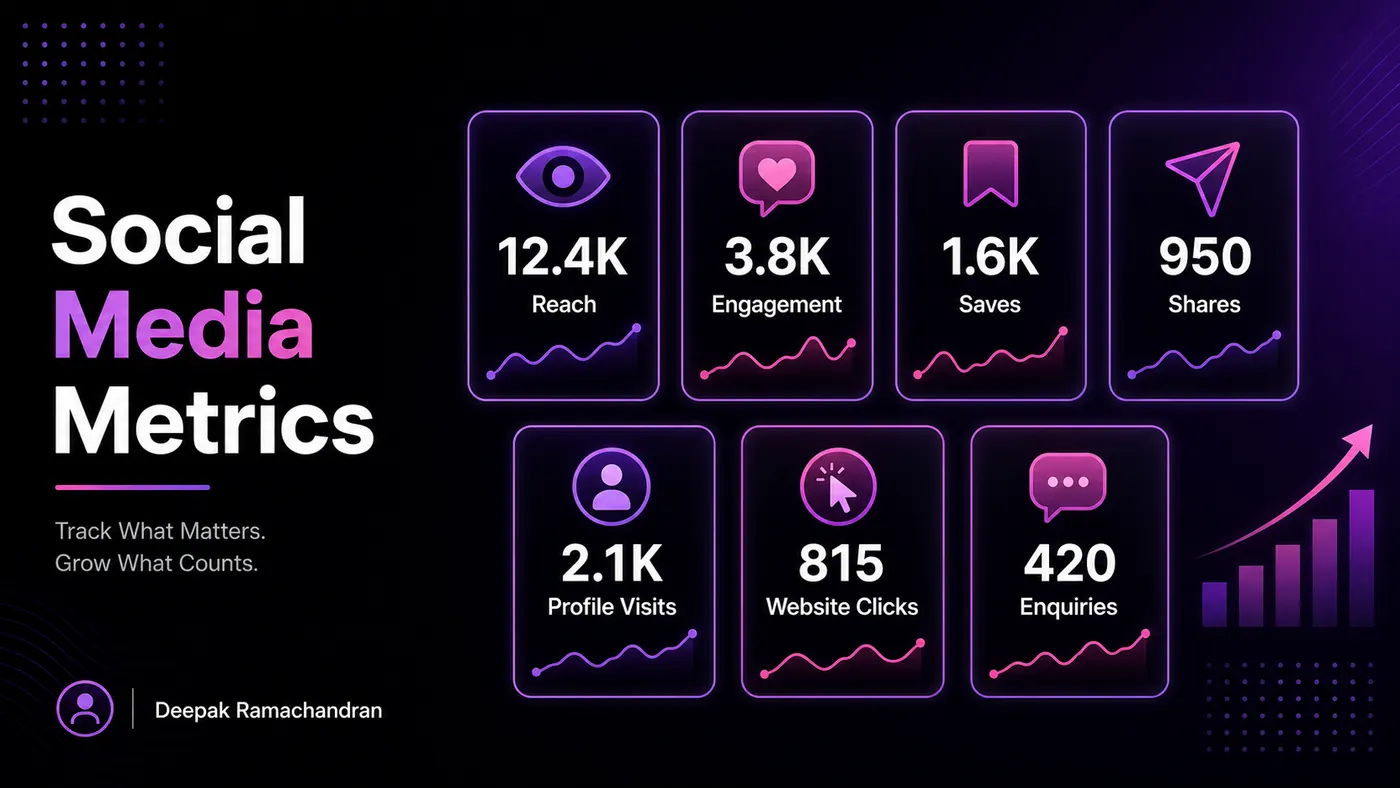 Social Media Marketing
Social Media Metrics
Understand which metrics support awareness, engagement, trust, website movement, enquiries, and better monthly content planning.
Read ArticleExplore Social Media Marketing Resources
Use the Social Media Marketing Resource Hub to choose another topic, continue to a focused article for implementation detail, or explore the Services page and Contact page when the discussion relates to a real platform, business profile, content system, Meta Ads requirement, campaign objective, or social media project.