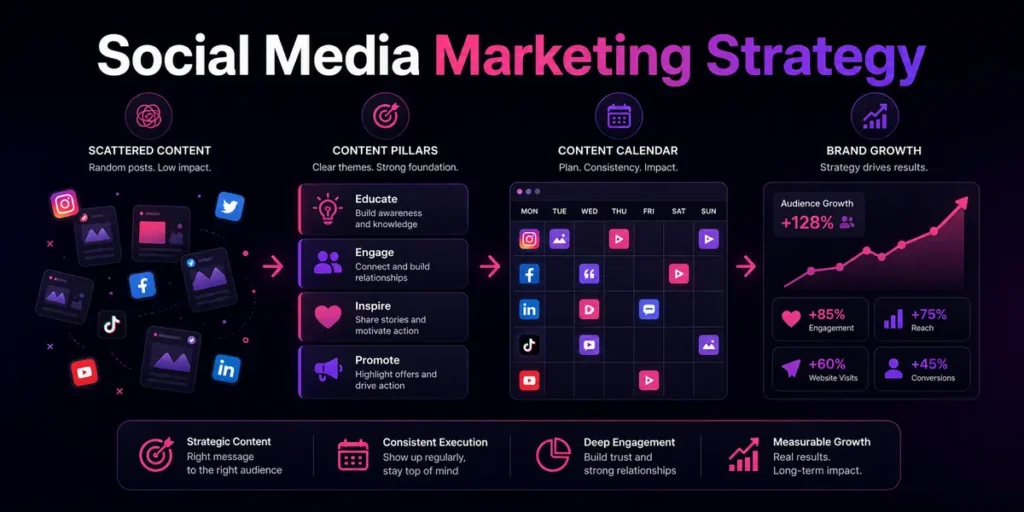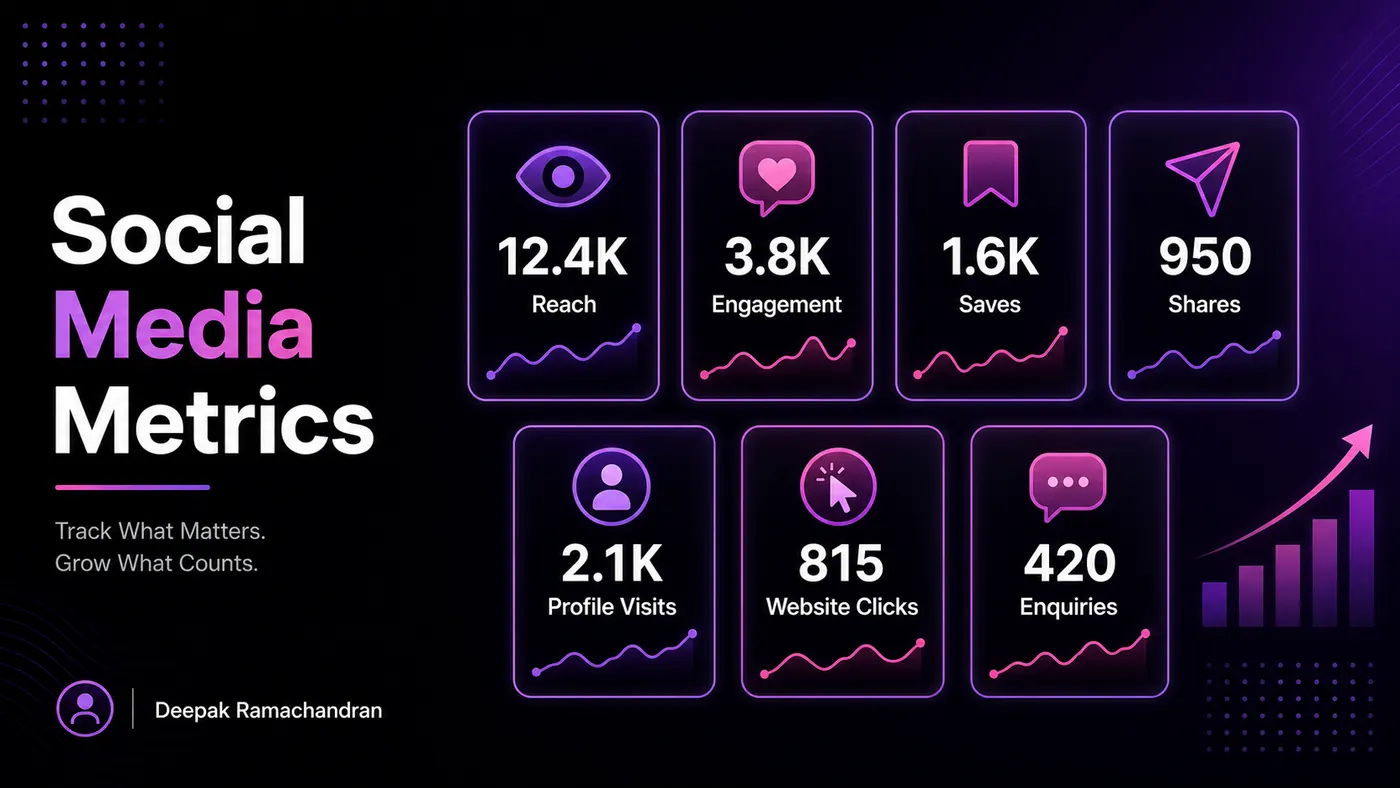
Social Media Metrics help measure how content performs, how audiences respond, and whether social media activity is supporting brand growth.
Posting content without reviewing metrics is like publishing without feedback.
A brand may be active on Instagram, LinkedIn, Facebook, or other platforms, but activity alone does not mean progress. The real question is whether the content is reaching the right audience, creating meaningful engagement, improving profile visits, driving clicks, or generating enquiries.
For social media marketing, metrics should not be checked only to feel good or bad about numbers. They should be used to understand what is working, what needs improvement, and what should be planned next.
On my website, the Social Media Marketing Resource Hub is structured to connect social media strategy, content calendars, Instagram optimization, LinkedIn content systems, metrics, and content examples into one practical SMM implementation system.
Which social media metrics matter most? The social media metrics that matter most depend on the objective: reach and impressions for awareness, interactions and engagement rate for engagement, link clicks and CTR for traffic, and leads, CPA or conversion rate for conversion goals. Metrics should be interpreted by goal, not treated as proof of business growth by themselves.
What is the difference between reach and impressions?
Reach counts the number of unique people who saw content, while impressions count total views, including repeat views from the same person. Both are useful for awareness, but they do not prove engagement or conversions alone.
How should engagement rate be interpreted?
Engagement rate should be interpreted as a signal of how people interacted relative to reach, impressions or followers. It is useful for comparing content quality, but it should be reviewed with saves, comments, clicks and business goals.
Which metrics should be used for awareness, traffic and conversion goals?
Awareness goals should use reach and impressions, traffic goals should use link clicks and CTR, and conversion goals should use leads, CPA or conversion rate. The metric set should match the campaign or content objective.
- Awareness: Reach and impressions
- Engagement: interactions and rate
- Traffic: link clicks and CTR
- Conversion: leads, CPA and rate
This original visual is provided as readable HTML so users and search systems can understand the full process without relying only on an image.
Reporting note: This framework explains metric selection by objective and does not show invented account performance.
Related reading and topical path
This article connects to its hub, guide and related supporting articles.
- /social-media-marketing-resource-hub/
- /social-media-marketing-guide/
- /social-media-marketing-strategy/
- /social-media-content-calendar/
Written by Deepak Ramachandran
Reviewed/updated: June 16, 2026
Table of Contents
- What Are Social Media Metrics?
- Why Social Media Metrics Matter for Brand Growth
- Vanity Metrics vs Useful Metrics
- Important Social Media Metrics to Track
- How to Connect Metrics With Content Goals
- Common Social Media Metrics Mistakes
- Practical Example: Monthly Social Media Metrics Review
- Final Social Media Metrics Checklist
- Conclusion
- FAQ Section
What Are Social Media Metrics?
Social media metrics are data points that show how content, profiles, and campaigns perform on social platforms.
Common social media metrics include:
Reach
Impressions
Likes
Comments
Shares
Saves
Profile visits
Follower growth
Website clicks
DMs
Story views
Video views
Watch time
Engagement rate
Click-through rate
Leads or enquiries
Each metric tells a different part of the story.
Reach shows how many people saw the content.
Engagement shows how people interacted with it.
Saves show that users found the content useful enough to return later.
Shares show that users found it valuable enough to send to others.
Website clicks show movement from social media to another platform.
DMs and enquiries show possible business interest.
A useful social media strategy does not treat all metrics equally. The right metric depends on the goal.
Why Social Media Metrics Matter for Brand Growth
Social media metrics matter because they help connect content activity with brand direction.
Without metrics, content decisions are based on assumptions.
A brand may assume that a post failed because it received fewer likes. But that same post may have received more saves, profile visits, or website clicks than usual.
Another post may get many likes but no comments, no saves, no shares, and no action.
This is why looking only at likes can be misleading.
Metrics help answer questions like:
Which topics create awareness?
Which formats create engagement?
Which posts build trust?
Which posts bring profile visits?
Which content drives website clicks?
Which platform is performing better?
Which content pillar needs more attention?
Which post types should be repeated?
Which topics should be turned into blogs or videos?
The official Meta Business Suite Insights guidance explains that insights can help users understand organic and paid activity across Facebook Pages and Instagram accounts. This makes it useful for reviewing content and audience performance from one place.
For a business or professional brand, social media metrics should support better decisions. They should help improve content calendars, profile optimization, platform strategy, and content quality.
Vanity Metrics vs Useful Metrics
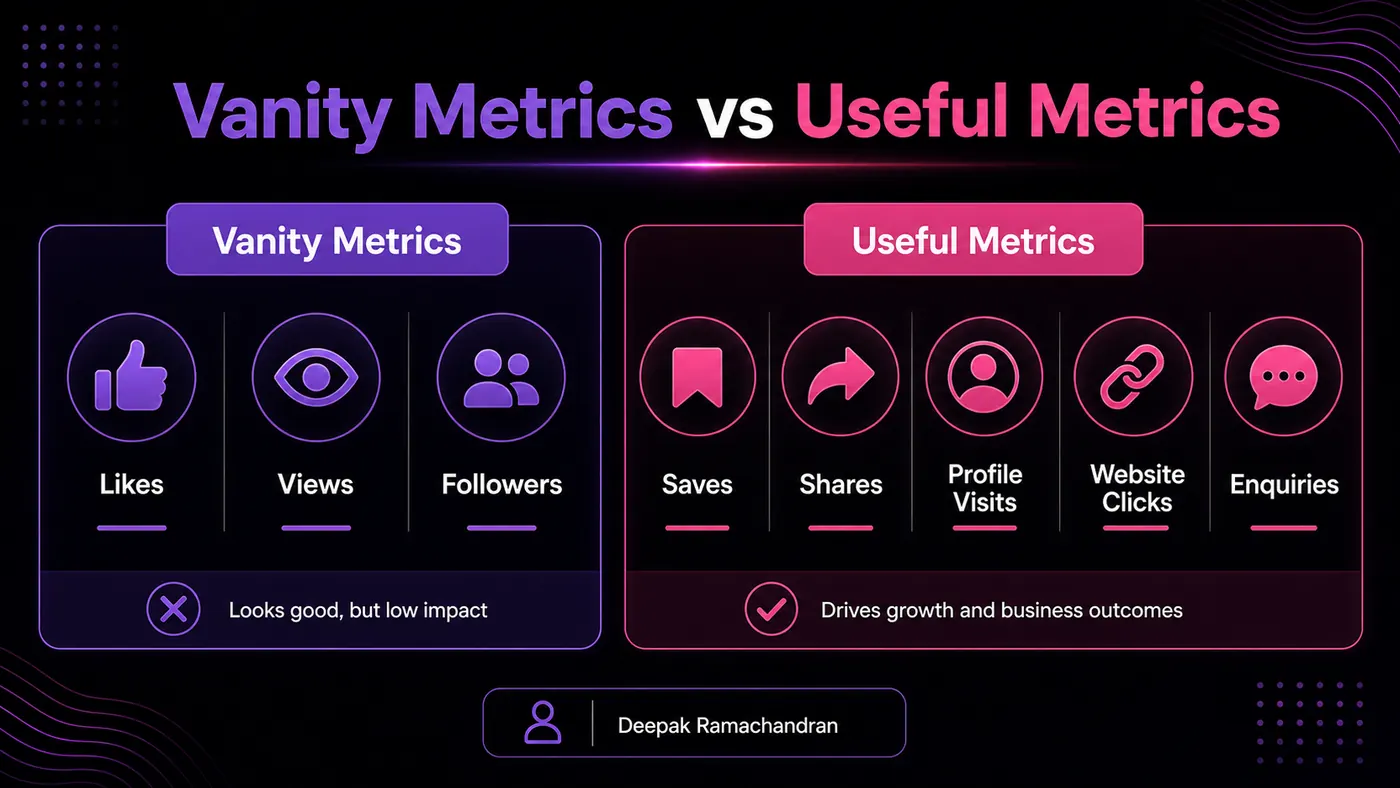
Not every metric has the same value.
Vanity metrics are numbers that look good but may not always show meaningful progress.
Examples:
Likes without comments
Views without watch time
Followers without engagement
Reach without relevance
Impressions without action
These numbers are not useless. But they can become misleading when judged alone.
Useful metrics are connected to a goal.
Examples:
Saves on educational content
Shares on checklist content
Comments on discussion content
Profile visits after authority posts
Website clicks from service-related posts
DMs after offer-related posts
Follower growth from relevant audience segments
Enquiries after trust-building content
A practical way to understand this:
Vanity metrics show attention.
Useful metrics show direction.
Attention matters, but direction matters more.
Important Social Media Metrics to Track
1. Reach
Reach shows how many unique people saw a post or content piece.
This is useful for brand awareness.
If reach is low, the content may not be getting enough distribution. This can happen because of weak hooks, poor posting time, low engagement, unclear format, or platform behavior.
Reach is useful when the goal is:
Brand awareness
Content discovery
Audience expansion
Reels performance
Top-of-funnel visibility
But reach alone does not prove content quality. A post may reach many people but still fail to create trust or action.
2. Impressions
Impressions show how many times content was displayed.
One person can create multiple impressions if they see the content more than once.
Impressions help understand content exposure.
High impressions with low engagement may mean people are seeing the content but not responding strongly.
High impressions with strong saves, shares, or comments may show that the content is relevant and valuable.
For brand recall, repeated exposure can help. But the content must still be clear and useful.
3. Engagement
Engagement includes actions such as likes, comments, shares, saves, replies, and clicks.
Engagement shows how people interact with content after seeing it.
Different engagement actions have different meaning.
A like may show quick approval.
A comment may show conversation.
A save may show usefulness.
A share may show strong relevance.
A click may show deeper interest.
Engagement should be reviewed by content type.
For example:
A checklist post may get more saves.
A question post may get more comments.
A reel may get more reach.
A case study post may get more profile visits.
A service post may get fewer likes but better enquiries.
Context matters.
4. Saves
Saves are one of the strongest signals for educational and checklist-style content.
When someone saves a post, it usually means they found it useful enough to revisit.
Saves are especially important for:
How-to posts
Checklists
Step-by-step guides
Templates
Frameworks
Carousel posts
Educational content
Resource posts
For a professional digital marketing brand, saves can indicate that the audience values practical content.
If a post gets many saves but fewer comments, it may still be successful.
The goal of every post is not conversation. Sometimes the goal is utility.
5. Shares
Shares show that people found the content useful, relatable, or important enough to send to others.
Shares can help increase reach beyond the existing audience.
Content that often gets shared includes:
Clear frameworks
Mistake lists
Industry explanations
Simple comparisons
Useful checklists
Strong opinions with logic
Relatable business problems
Practical tips
Shares can be especially valuable because they show that content has audience-to-audience movement.
For brand growth, shareable content helps increase discovery.
6. Comments
Comments show conversation and response.
A post with meaningful comments can support relationship building, trust, and community.
But not all comments are equal.
Generic comments like “nice post” may not mean much. Detailed comments, questions, disagreements, or experience-based replies are stronger signals.
Comments are useful for:
LinkedIn posts
Community content
Opinion-based posts
Question posts
Case study breakdowns
Behind-the-scenes posts
Educational discussions
For professional positioning, meaningful comments are more valuable than random engagement.
7. Profile visits
Profile visits show that a post made someone interested enough to check the account or profile.
This is important because many users do not convert directly from a single post.
They may first:
Read a post
Visit the profile
Check bio
Review highlights
Look at pinned posts
Click website link
Send a DM
Follow later
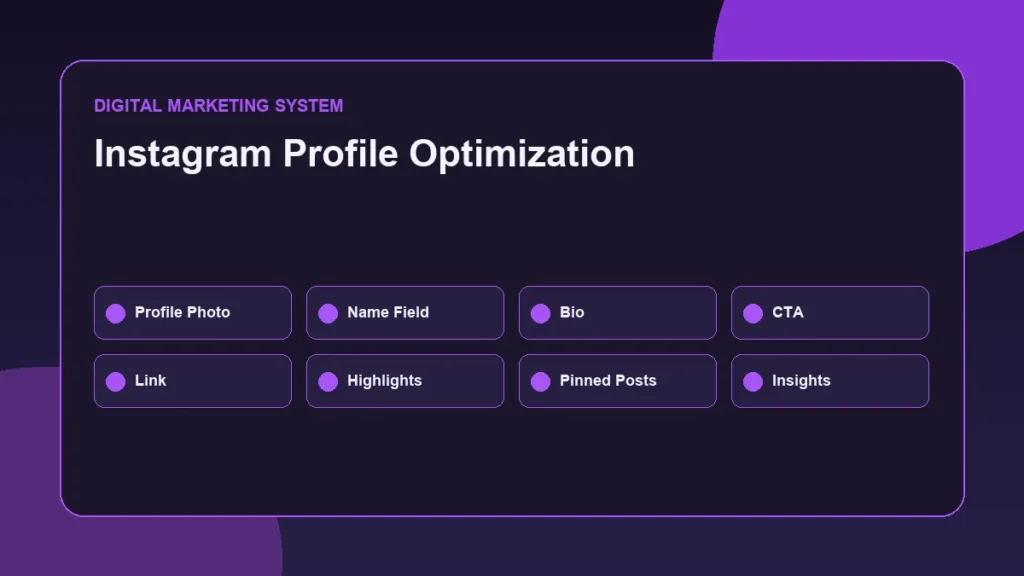
Profile visits connect content performance with profile optimization.
If content gets reach but no profile visits, the hook or authority signal may need improvement.
If profile visits increase but website clicks or follows do not improve, the profile may need better positioning, clearer bio, stronger CTA, or better pinned content.
This connects directly with Instagram profile optimization.
8. Website clicks
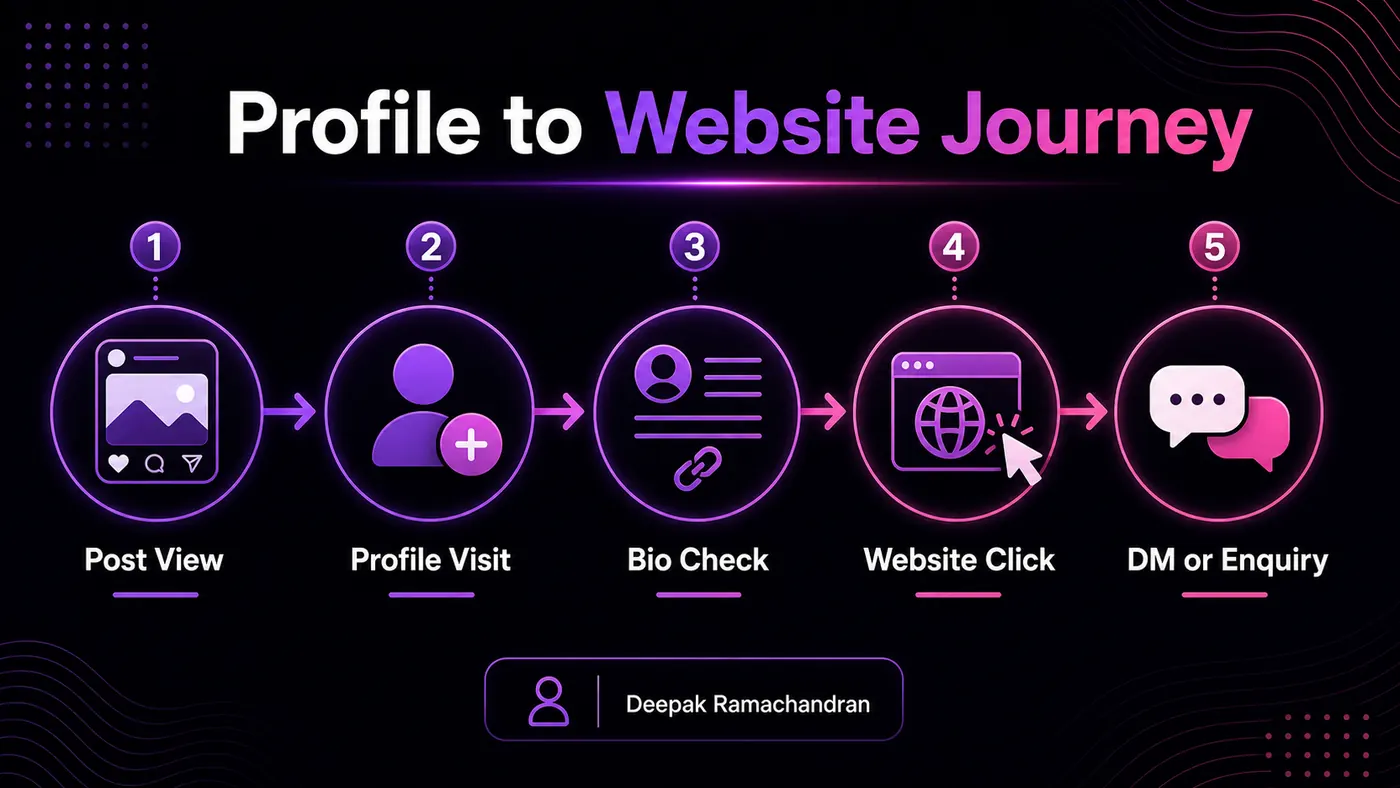
Website clicks show movement from social media to a website, landing page, blog, portfolio, service page, or contact page.
This is important because social media should not always keep users inside the platform.
For businesses and professional brands, website clicks can support:
Lead generation
Blog traffic
Portfolio visits
Service page visits
Contact enquiries
Case study visibility
Newsletter sign-ups
Landing page traffic
Website clicks are especially useful when posts have a clear CTA.
Example:
Read the full guide
View the portfolio
Check the checklist
Visit the service page
Download the resource
Book a consultation
Explore the blog
A post with fewer likes but more website clicks may be more valuable than a post with high likes and no action.
9. Follower growth
Follower growth shows whether the audience base is increasing.
But follower growth should be judged carefully.
A large follower count is not useful if the audience is irrelevant, inactive, or not aligned with the brand.
Better follower growth means:
Relevant people are following
Engagement quality improves
Profile visits convert into follows
Content pillars attract the right audience
The audience matches business or professional goals
Follower growth should be reviewed with engagement and profile visits.
If followers increase but engagement drops, the content may be attracting the wrong audience or not staying relevant.
10. Leads, DMs, and enquiries
For businesses, leads and enquiries are among the most important social media outcomes.
These can include:
DM enquiries
WhatsApp clicks
Call clicks
Website form submissions
Booking requests
Quote requests
Product enquiries
Service enquiries
Consultation requests
Not every social media strategy needs immediate leads. Some strategies focus first on awareness and trust.
But when the goal is business growth, enquiry tracking matters.
A simple tracking system can include:
Date
Platform
Post topic
Content format
CTA used
DMs received
Website clicks
Leads generated
Lead quality notes
This helps connect content with real business signals.
How to Connect Metrics With Content Goals
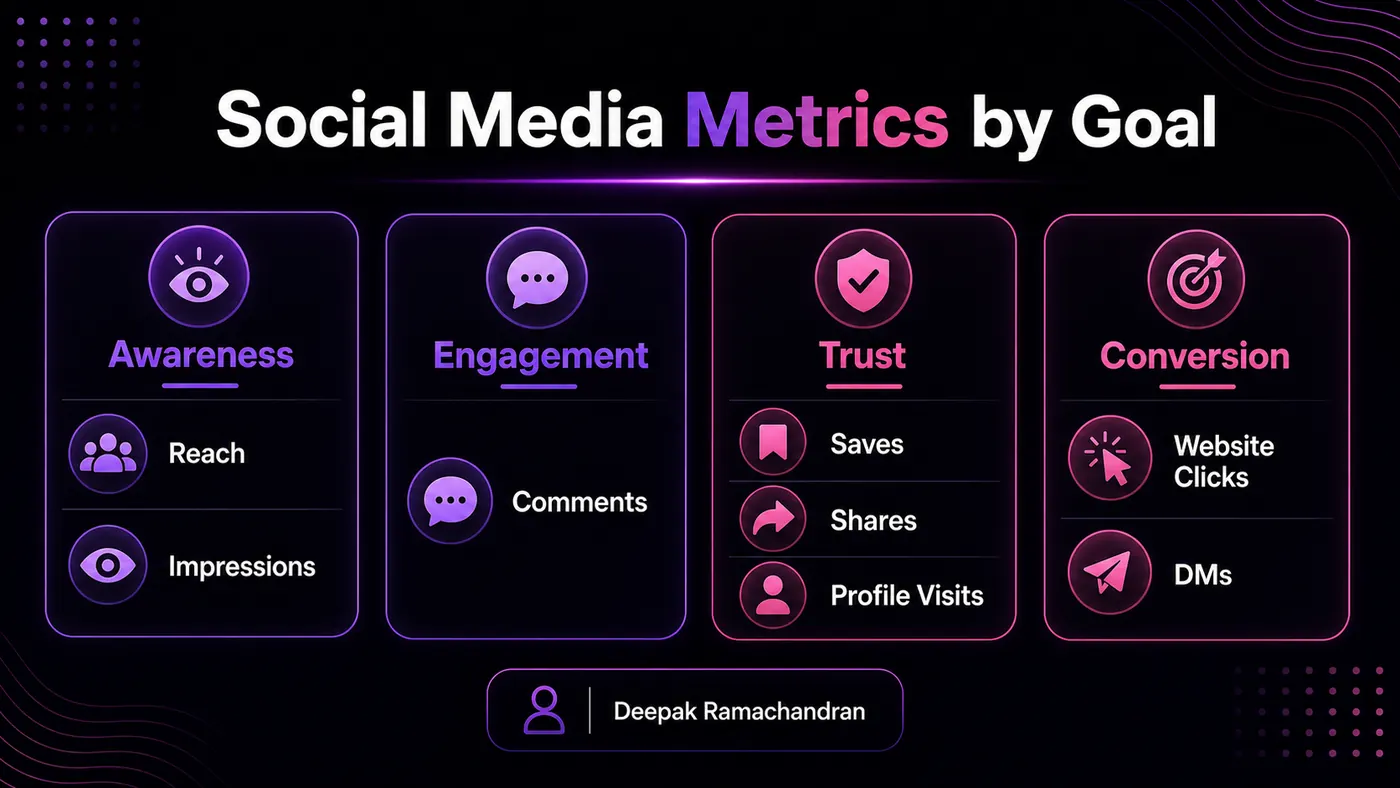
Social media metrics should be connected to content goals. Otherwise, reporting becomes confusing.
Awareness metrics
Use these when the goal is visibility:
Reach
Impressions
Video views
Follower growth
Profile visits
Story views
These metrics help understand whether the brand is being discovered.
Engagement metrics
Use these when the goal is audience interaction:
Comments
Replies
Likes
Poll responses
Story interactions
Engagement rate
These metrics help understand whether content is starting conversations.
Trust metrics
Use these when the goal is credibility:
Saves
Shares
Profile visits
Long comments
Content clicks
Pinned post views
Portfolio clicks
Repeat engagement
These metrics help understand whether the content is useful and credible.
Conversion metrics
Use these when the goal is action:
Website clicks
DM enquiries
WhatsApp clicks
Call clicks
Form submissions
Bookings
Leads
Sales
These metrics help understand whether social media is supporting business outcomes.
A strong social media content calendar should balance all four areas: awareness, engagement, trust, and conversion.
Common Social Media Metrics Mistakes
Many brands track metrics, but still make weak decisions.
Common mistakes include:
Judging every post only by likes
Ignoring saves and shares
Not tracking profile visits
Not reviewing website clicks
Not connecting metrics to content goals
Comparing different platforms directly
Ignoring content format differences
Not tracking DMs or enquiries
Checking data without changing strategy
Ignoring a structured social media marketing strategy
Using follower count as the main success metric
Not separating awareness content from conversion content
Not reviewing monthly trends
Not noting which content pillar performs best
Not using data inside the content calendar
The biggest mistake is checking metrics emotionally.
One post doing badly does not mean the strategy failed.
One post doing well does not mean the full strategy is strong.
Metrics should be reviewed as patterns.
Practical Example: Monthly Social Media Metrics Review
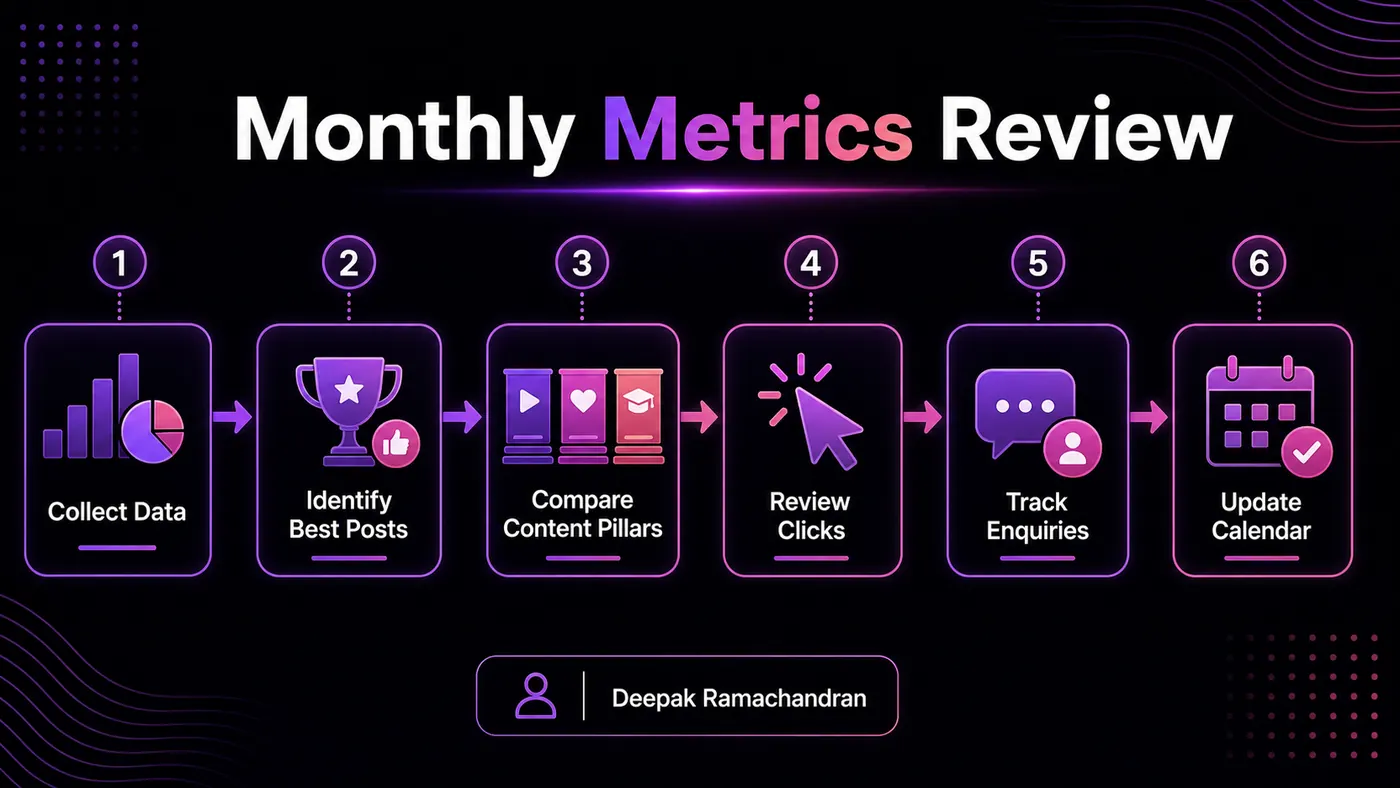
Here is a simple monthly review example for a professional digital marketing brand.
Content published:
8 LinkedIn posts
8 Instagram posts
4 reels
4 story sets
2 blog promotion posts
Monthly review fields:
Best reach post
Best saves post
Best shares post
Best comments post
Best profile visit post
Best website click post
Best DM/enquiry post
Weakest performing topic
Best content pillar
Best format
Topic to repeat
Topic to improve
Post to repurpose
Blog topic idea from performance
Example findings:
Best reach: Reel on homepage mistakes
Best saves: Carousel on content calendar checklist
Best comments: LinkedIn post on random posting
Best profile visits: Proof-of-work post
Best website clicks: Blog post CTA
Best DM signal: Landing page review post
Next month’s action:
Create more checklist carousels
Use stronger CTAs in proof posts
Turn the best carousel into a blog
Repurpose LinkedIn post into Instagram carousel
Improve profile CTA
Track website clicks more carefully
This is how social media metrics become useful.
They should guide the next content calendar, not just sit inside analytics dashboards.
Final Social Media Metrics Checklist
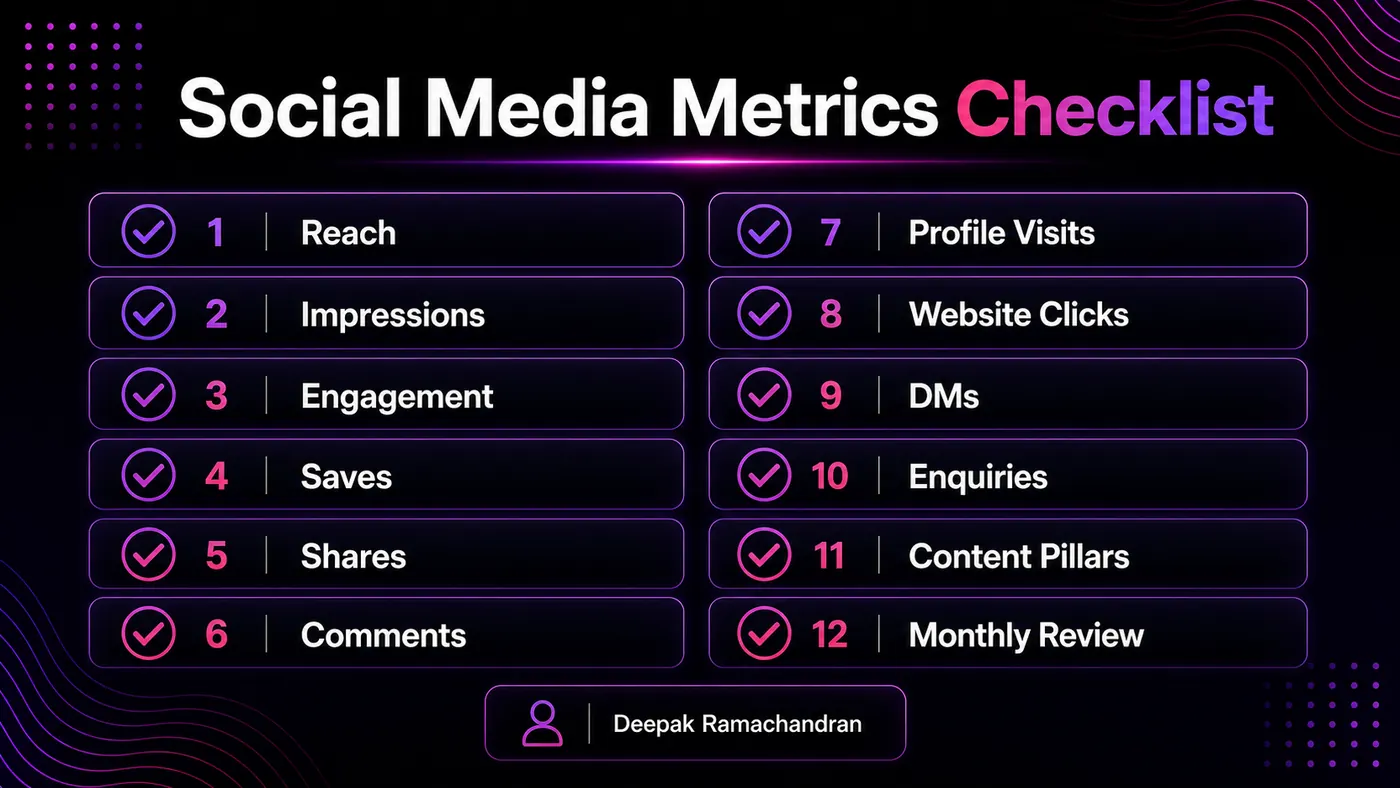
Before reviewing social media performance, check:
Content goal is clear
Content pillars are defined
Metrics are grouped by goal
Reach is reviewed for awareness
Impressions are reviewed for exposure
Engagement is reviewed by action type
Saves are reviewed for usefulness
Shares are reviewed for relevance
Comments are reviewed for conversation quality
Profile visits are reviewed for interest
Website clicks are reviewed for action
DMs and enquiries are tracked
Follower growth is checked for relevance
Best content format is identified
Best content pillar is identified
Weak posts are reviewed calmly
Monthly trends are compared
Content calendar is updated based on insights
Reporting is not based only on likes
Metrics are connected to business or brand goals
Social media metrics should make content decisions clearer.
Conclusion
Social Media Metrics matter because they show whether content is supporting brand visibility, engagement, trust, and action.
The goal is not to chase every number.
The goal is to understand which numbers matter for the content goal.
For brand awareness, reach and impressions matter.
For engagement, comments, replies, and interactions matter.
For trust, saves, shares, profile visits, and repeat engagement matter.
For conversion, website clicks, DMs, calls, enquiries, and leads matter.
A strong social media strategy does not depend on random posting or emotional reactions to likes.
It uses metrics to improve content planning, profile optimization, platform strategy, and brand growth.
When metrics are reviewed properly, the content calendar becomes smarter, the profile becomes clearer, and the brand becomes easier to understand.
Related Social Media Marketing Guides
- Social Media Marketing Resource Hub
- Social Media Marketing Guide
- Social Media Marketing Strategy
- Instagram Profile Optimization Checklist
- Social Media Content Calendar
- SEO and Performance Marketing Services in Thrissur
FAQ Section
What are Social Media Metrics?
Social Media Metrics are data points that measure content and profile performance across social platforms. They include reach, impressions, engagement, saves, shares, comments, profile visits, website clicks, and enquiries.
Which social media metric is most important?
There is no single most important metric for every brand. The most important metric depends on the goal. For awareness, reach matters. For trust, saves and shares matter. For leads, website clicks, DMs, and enquiries matter.
Are likes important for social media growth?
Likes can show quick engagement, but they should not be the only metric used. Saves, shares, comments, profile visits, website clicks, and enquiries often give deeper insight.
How often should social media metrics be reviewed?
A weekly review is useful for short-term content performance. A monthly review is better for identifying patterns, best-performing content pillars, and future content calendar improvements.
How can social media metrics improve a content calendar?
Metrics show which topics, formats, platforms, and CTAs perform better. This helps decide what to repeat, improve, repurpose, or remove from the next content calendar.
CTA Section
If social media feels inconsistent, the issue may not be only content creation. It may be the lack of a proper review system.
Explore the Social Media Marketing Resource Hub for more practical guides on social media strategy, content calendars, Instagram optimization, LinkedIn positioning, and content performance.
Explore deepakramachandran.com or Contact Digital Marketer in Thrissur for a professional discussion about social media strategy, content systems, and measurement.
LinkedIn content measurement connects post analytics, engagement quality, profile views and search appearances with broader social media performance review.
A social media content measurement example connects reach, engagement, saves, profile visits and website clicks with broader strategy review.