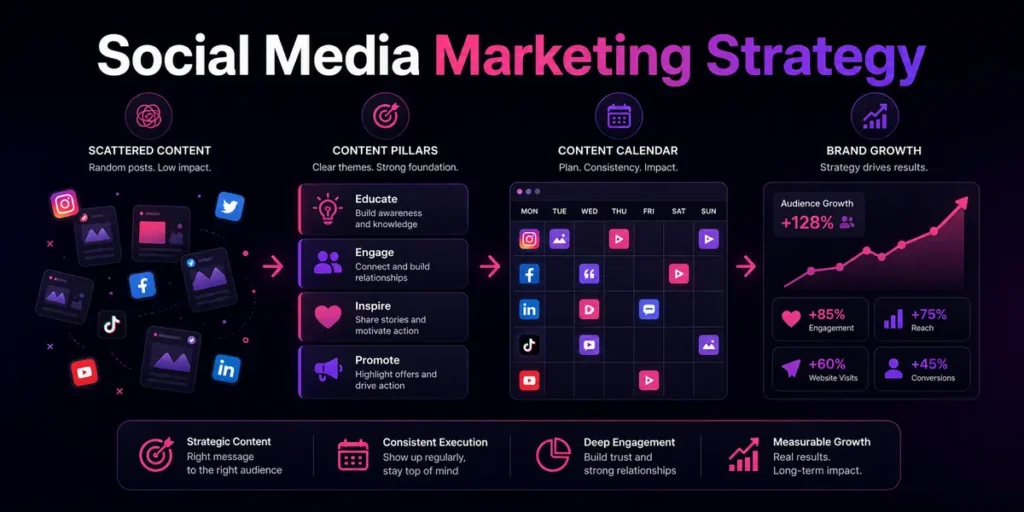
A Social Media Content Calendar is a planning system that helps organize what to post, where to post, when to post, and why each post matters.
Without a content calendar, social media often becomes random. One day there is a motivational post, the next day there is a service post, then nothing for a week. This creates inconsistency, weak messaging, and unclear brand recall.
A proper content calendar gives structure to social media marketing. It connects content pillars, platform goals, audience intent, post formats, publishing dates, captions, creatives, and performance review into one clear workflow.
For a business, creator, or professional brand, social media should not only be active. It should be planned.
On this website, the Social Media Marketing Resource Hub is structured to organize practical topics like content calendars, Instagram profile optimization, LinkedIn content systems, social media metrics, and brand visibility into one connected SMM knowledge system.
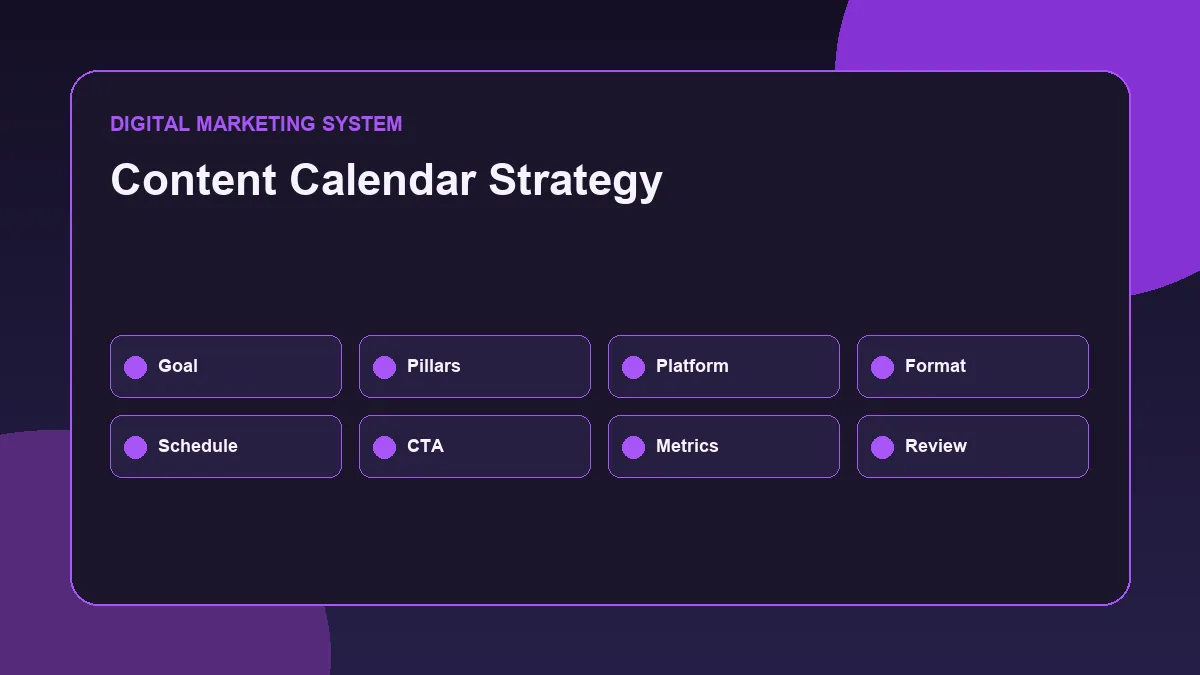
What should a social media content calendar include? A social media content calendar should include date, platform, content pillar, format, hook, caption angle, creative status, CTA, owner, publishing status and review metric. It turns content planning into a visible workflow so posts are connected to audience needs, business goals and performance review instead of being planned randomly.
How far ahead should social media content be planned?
Most social media content can be planned one to four weeks ahead depending on the business, approval process and content type. The calendar should still leave room for timely updates, platform changes and audience feedback.
Which fields should a content calendar contain?
A useful content calendar should contain date, platform, pillar, topic, format, hook, CTA, asset status, caption status, approval status and metric to review. These fields make planning, production and reporting easier to manage.
How should the calendar be reviewed using performance data?
The calendar should be reviewed by comparing content pillars, formats and hooks against reach, engagement, saves, clicks or leads. The goal is to learn what supports the business objective and improve future planning, not chase every vanity metric.
- Date
- Platform
- Content Pillar
- Format
- Hook
- CTA
- Status
- Metric
This original visual is provided as readable HTML so users and search systems can understand the full process without relying only on an image.
Sample planning template fields
| Week | Platform | Content pillar | Format | Content angle | CTA | Status | Metric to review |
|---|---|---|---|---|---|---|---|
| Week 1 | Education | Carousel | Explain one common social media mistake | Save for planning | Draft | Saves and shares | |
| Week 1 | Proof of work | Text post | Document a content planning process | Visit article | Planned | Profile visits and clicks | |
| Week 1 | Instagram Stories | Behind the scenes | Story set | Show planning, writing, or design progress | Reply with a question | Planned | Replies and taps |
| Week 2 | Facebook Page | Trust | Short post | Share a simple business-facing tip | Read guide | Draft | Reach and link clicks |
| Week 2 | Education | Framework post | Break down a practical checklist | Comment with additions | Planned | Comments and saves | |
| Week 2 | Portfolio proof | Carousel | Turn a blog or website update into a visual summary | Visit website | Planned | Website clicks |
This is a sample planning template, not invented account performance.
Related reading and topical path
This article connects to its hub, guide and related supporting articles.
- /social-media-marketing-resource-hub/
- /social-media-marketing-guide/
- /social-media-marketing-strategy/
- /social-media-metrics/
Written by Deepak Ramachandran
Reviewed/updated: June 16, 2026
Table of Contents
- What Is a Social Media Content Calendar?
- Why a Social Media Content Calendar Matters
- How Content Calendars Support Social Media Strategy
- Social Media Content Planning Framework
- Common Social Media Calendar Mistakes
- Practical Example: Weekly Social Media Content Calendar
- Final Content Calendar Checklist
- FAQ Section
What Is a Social Media Content Calendar?
A social media calendar is a schedule that organizes planned social media posts across platforms.
It usually includes post date, platform, content topic, content pillar, caption idea, creative format, post type, CTA, hashtags, status, owner, publishing time, and performance notes.
A simple calendar can be built in Google Sheets, Excel, Notion, Trello, or a social media scheduling tool. The tool matters less than the strategy behind it.
The goal is not just to fill dates with random posts. The real goal is to make sure every post supports a clear purpose.
That purpose may be brand awareness, education, engagement, lead generation, community building, portfolio visibility, trust building, website traffic, product promotion, recruiter-facing credibility, or local business visibility.
A content calendar turns scattered content ideas into a structured publishing system.
Why a Social Media Content Calendar Matters
Social media marketing is not only about posting more. It is about posting with consistency, clarity, and purpose.
A content calendar matters because it helps solve common problems such as what to post today, whether one type of content is being overused, whether posts connect to brand goals, whether enough educational content is being created, whether ideas are being repeated, whether performance is being tracked, and whether Instagram, LinkedIn, and other platforms are being handled differently.
Without planning, social media becomes reactive. With planning, it becomes strategic.
For example, a local service business may need posts that explain services, answer customer doubts, show process, build trust, and encourage enquiries. If the business only posts festival creatives or random offers, the audience may not clearly understand what the brand does.
A content calendar helps balance different content types. It also saves time because ideas, captions, and creatives can be prepared in batches instead of being created at the last minute.
For the wider strategy behind this workflow, this topic connects with the Social Media Marketing Guide.
How Content Calendars Support Social Media Strategy
A content calendar is not separate from social media strategy. It is the execution layer of the strategy. The strategy decides what the brand wants to achieve. The calendar decides how that strategy becomes visible through posts.
Content pillars
Content pillars are the main themes a brand posts about consistently. For example, a digital marketing professional may use pillars like SEO tips, performance marketing insights, social media strategy, website optimization, case study breakdowns, analytics and reporting, practical checklists, and portfolio proof-of-work.
A restaurant may use pillars like menu highlights, behind the scenes, customer experience, offers, chef stories, local events, food education, reviews, and trust signals.
Content pillars prevent random posting. They help the brand stay focused while still creating variety. A strong content calendar usually has three to six core content pillars. Too many pillars can create confusion. Too few can make the page repetitive.
Platform planning
Every platform has a different content behavior. Instagram is visual and discovery-focused. LinkedIn is professional and insight-focused. Facebook can work well for community and local visibility. YouTube Shorts and Reels can support short-form video discovery. X can support opinions, updates, and quick commentary.
The same idea can be adapted across platforms, but it should not always be copy-pasted without context.
For example, the topic “Why random posting does not build a brand” can become an Instagram carousel, a LinkedIn text post, a short reel, or a story poll. The content idea is the same, but the format changes based on platform behavior.
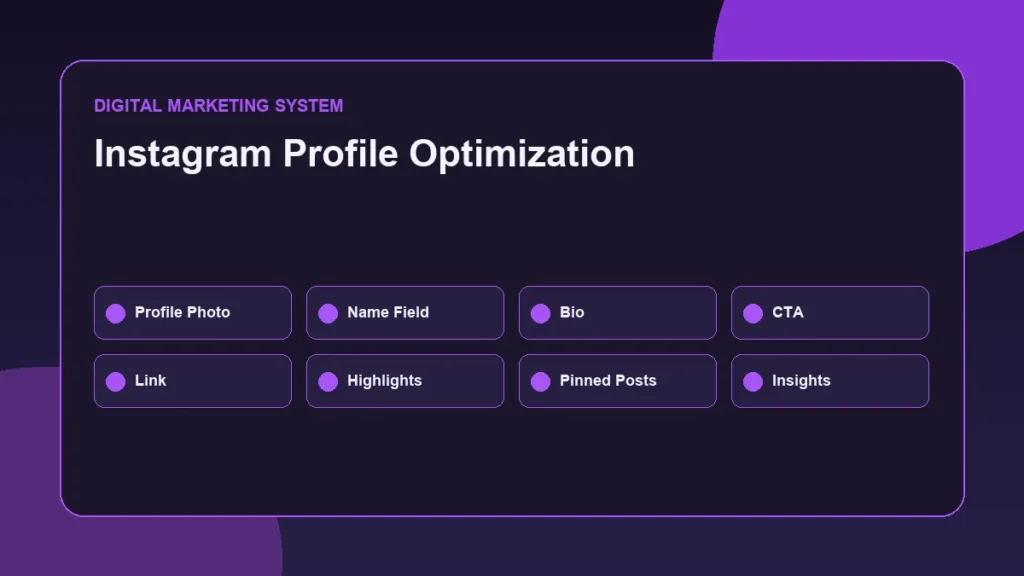
This also connects with Instagram profile optimization, because profile clarity and planned content should support the same brand positioning.
Publishing consistency
Consistency does not mean posting every hour. It means showing up in a reliable pattern with useful content.
For a small business or personal brand, a realistic posting schedule is better than an aggressive schedule that cannot be maintained. Examples include three Instagram posts per week, two LinkedIn posts per week, one reel per week, three to five stories per week, one monthly campaign theme, one weekly educational carousel, and one proof-based post every week.
The calendar should match available time, content creation capacity, and platform goals. A content calendar that looks perfect but cannot be executed is not useful.
Performance review
A good calendar should not only plan posts. It should also help review performance.
After publishing, add performance notes such as reach, impressions, engagement, saves, shares, comments, profile visits, link clicks, DMs, enquiries, follower growth, best performing format, and weakest performing topic.
This helps identify what the audience actually responds to. Social media strategy improves when planning and reporting work together. This connects directly with social media metrics, where performance should be measured beyond likes alone.
Social Media Content Planning Framework
Use this framework to build a practical social media content calendar.
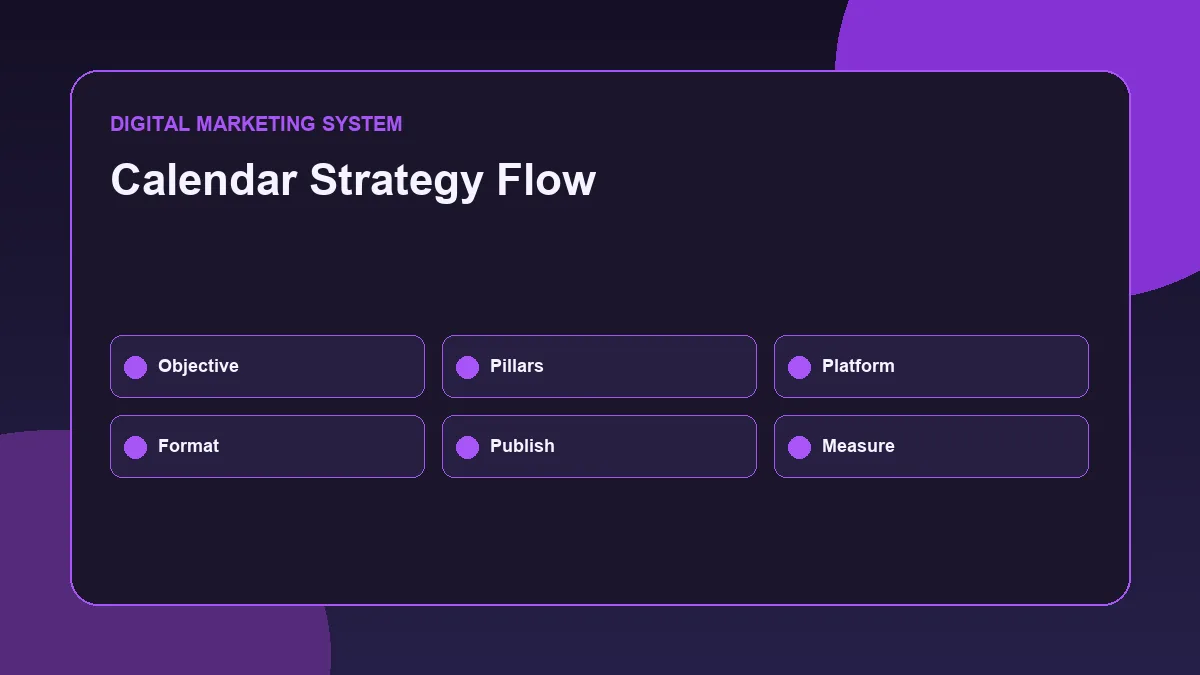
1. Define the content goal
Before planning posts, define the goal. A calendar without a goal becomes a posting list.
Common goals include increasing brand visibility, educating the audience, generating leads, building authority, improving engagement, driving website visits, supporting a campaign, promoting a service, building recruiter trust, and showing proof-of-work.
For example, a digital marketing portfolio may have a goal like: build professional trust by sharing practical SEO, performance marketing, SMM, analytics, and website optimization insights.
A local business may have a goal like: increase enquiries by educating customers and showing service credibility. The goal affects the type of content that should be planned.
2. Choose content pillars
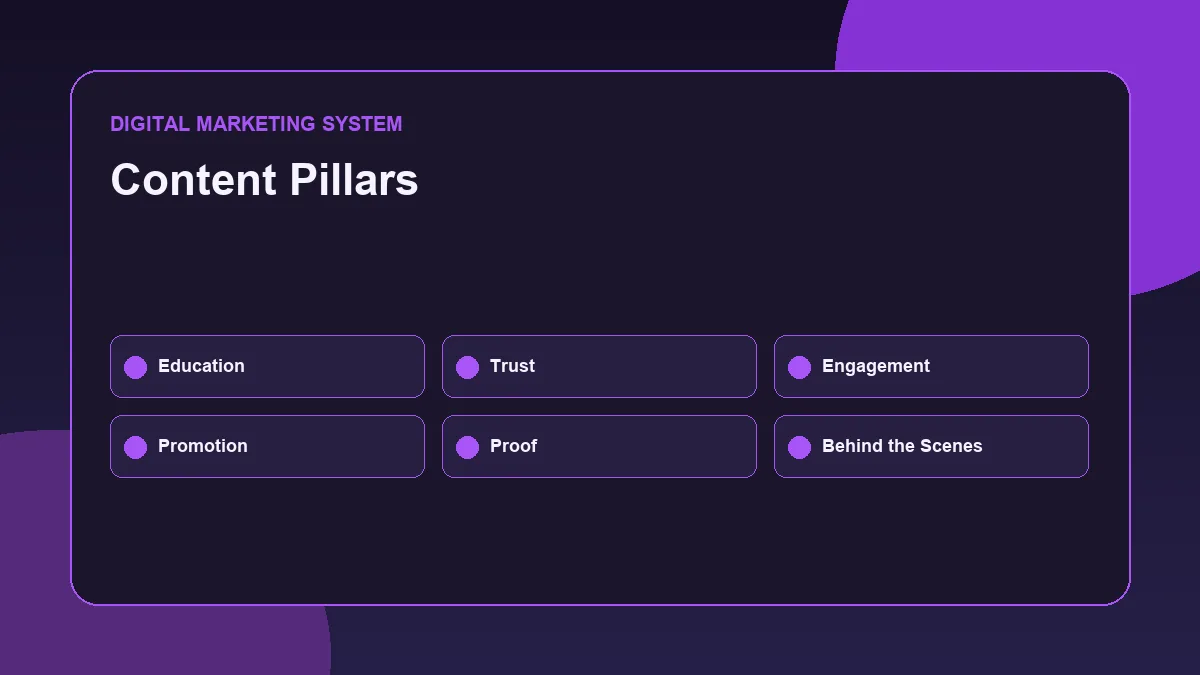
After the goal is clear, choose content pillars. A simple content pillar structure can include educational content, trust-building content, engagement content, promotional content, proof-based content, and behind-the-scenes content.
For a professional digital marketing brand, content pillars may look like SEO education, performance marketing breakdowns, social media strategy, website and CRO tips, analytics and reporting, and portfolio proof-of-work.
For each pillar, write five to ten topic ideas. For social media strategy, examples include why random posting fails, how to create content pillars, how to plan weekly content, what social media metrics matter, how to optimize an Instagram profile, how to write better captions, how to repurpose content, and how to review monthly performance.
This makes planning easier because the calendar is built from topic systems, not random inspiration.
3. Map content to platforms
Not every post needs to go everywhere. Choose platforms based on audience and purpose.
Examples include Instagram for visual tips, reels, carousels, and stories; LinkedIn for professional insights, proof-of-work, and case studies; Facebook for local updates and community content; YouTube Shorts for quick educational videos; and website blogs for detailed long-form explanation.
A content calendar should clearly mention the platform for each post. This prevents confusion and helps adapt content properly.
4. Decide posting frequency
Posting frequency should be realistic. A beginner mistake is creating a calendar that looks strong for one week but becomes impossible to maintain.
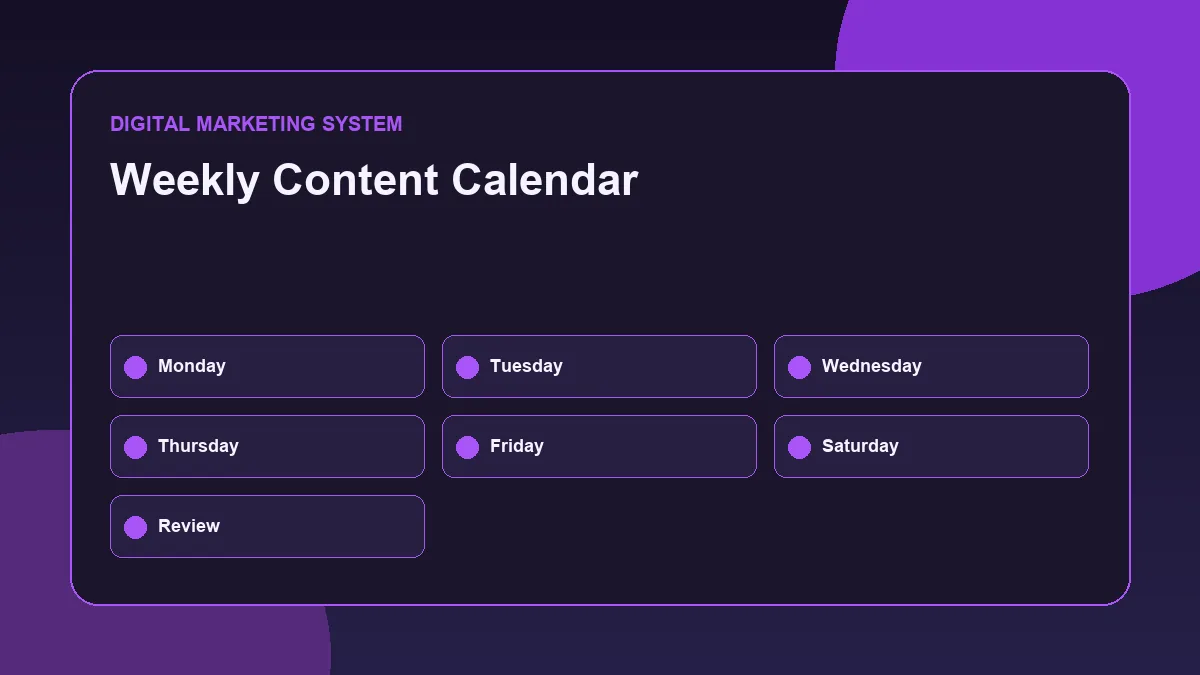
A practical weekly structure may look like Monday educational post, Wednesday practical checklist, Friday proof or example post, Saturday story engagement, and Sunday content review or planning.
For brands with more resources, the frequency can increase. For small teams or individual professionals, consistency is more important than volume. A steady three-post weekly system is better than posting daily for ten days and disappearing for three weeks.
5. Plan content formats
A content calendar should include formats, not just topics. Common social media formats include carousel, static post, reel, short video, story, poll, text post, document post, infographic, meme if brand-appropriate, live session, case study post, checklist, before-after breakdown, and FAQ post.
Different formats serve different purposes. Carousels can explain step-by-step ideas. Reels can increase discovery. Stories can create interaction. Text posts can explain deeper insights. Checklists can increase saves. Proof posts can build trust.
A good calendar balances these formats.
6. Create weekly and monthly themes
Themes help make the calendar more connected. Instead of planning twenty unrelated posts, create weekly or monthly themes.
Example monthly theme: Social Media Strategy Basics. Week one can focus on profile optimization, week two on content pillars, week three on content calendar planning, and week four on metrics and review.
This creates topical consistency. For a website or professional portfolio, this also helps content repurposing. A blog topic can become a LinkedIn post, an Instagram carousel, a reel script, and a story poll.
7. Batch ideas, captions, and creatives
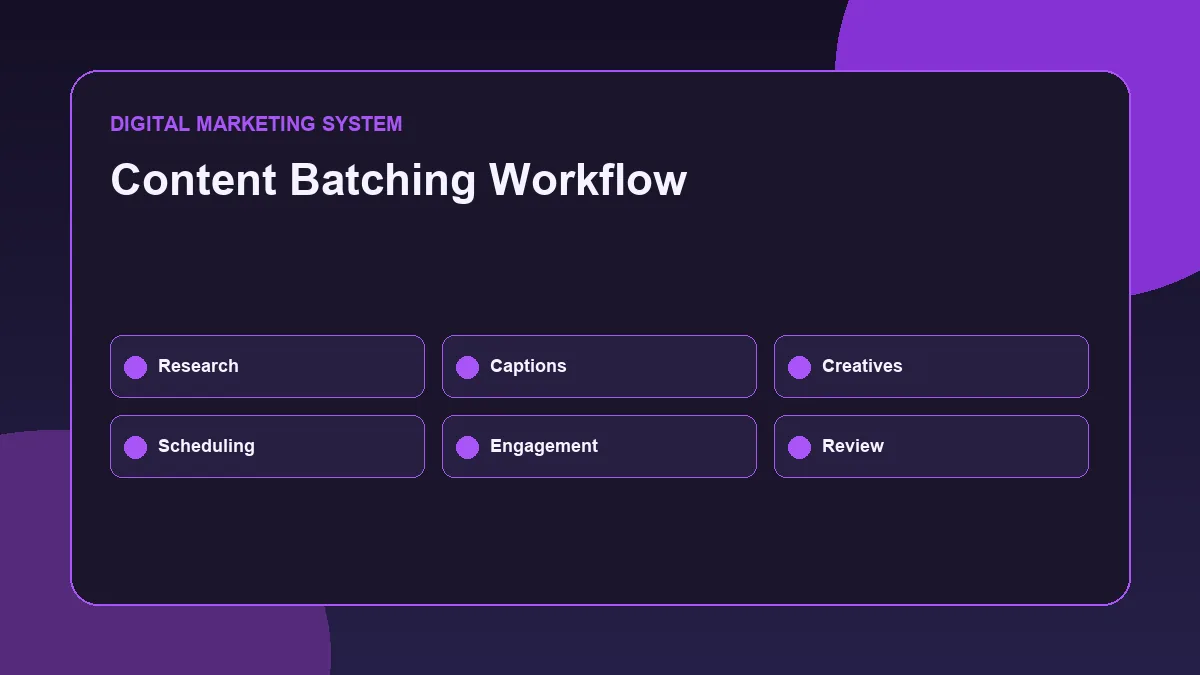
Content batching saves time. Instead of creating one post every day from scratch, batch similar tasks.
A simple batching workflow can include research and idea collection, caption writing, creative design, reel or video recording, post scheduling, engagement and replies, and performance review.
Batching improves consistency because the calendar does not depend on daily motivation. For a small business, this can reduce last-minute posting pressure. For a personal brand, it helps maintain quality while managing other work.
8. Add publishing and approval status
A useful content calendar should show the status of each post. Status labels can include idea, draft, caption written, design pending, ready for review, approved, scheduled, published, repurposed, and needs improvement.
This is especially useful when more than one person is involved. Even for one person, status tracking helps avoid confusion.
A calendar should make the content workflow visible. For Facebook and Instagram, Meta Business Suite scheduling workflow can support post creation, scheduling, and post management inside Meta’s ecosystem.
9. Track performance metrics
A calendar should include space for performance tracking. Useful fields include reach, impressions, likes, comments, shares, saves, profile visits, website clicks, DMs, enquiries, follower change, watch time, completion rate, best performing hook, and best performing format.
The exact metrics depend on the platform and goal. For awareness, reach and impressions may matter. For engagement, comments, saves, shares, and replies matter. For lead generation, DMs, calls, enquiries, and website clicks matter. For professional credibility, profile visits, meaningful comments, and recruiter engagement may matter.
The calendar should help connect content activity with actual outcomes.
10. Review and improve the calendar
A content calendar should not be fixed forever. Review it weekly or monthly.
Ask which topics performed best, which formats received saves or shares, which posts brought profile visits, which captions created comments, which posts felt too generic, which pillars need more content, which platform needs a different approach, which content can be repurposed, and which topics should become blogs or videos.
This turns the calendar into a learning system. Social media strategy improves when each month becomes smarter than the previous month.
Common Social Media Calendar Mistakes
Many content calendars fail because they are built for activity, not strategy. Common mistakes include:
- Planning posts without a goal
- Using too many content pillars
- Posting the same format repeatedly
- Ignoring platform differences
- Copy-pasting the same caption everywhere
- Creating only promotional content
- Not tracking performance
- Not reviewing the calendar
- Not leaving space for trends or timely posts
- Using too many hashtags without relevance
- Posting only when motivation is high
- Not aligning posts with business goals
- Ignoring audience questions
- Not repurposing strong ideas
- Creating a calendar that is too difficult to maintain
The biggest mistake is treating a content calendar as only a posting schedule. A good calendar should connect strategy, creativity, execution, and performance review.
A future social media content strategy example can show how these ideas turn into a monthly topic plan and publishing workflow.
Practical Example: Weekly Social Media Content Calendar
Here is a simple weekly content calendar example for a professional digital marketing brand.
- Monday: LinkedIn text post on why search intent matters before writing a blog. CTA: ask readers how they currently choose blog topics.
- Tuesday: Instagram carousel on five signs your content calendar is too random. CTA: save this checklist for planning.
- Wednesday: Instagram Stories poll asking whether people plan content weekly or daily. CTA: reply with a content planning challenge.
- Thursday: LinkedIn practical breakdown on why landing pages matter after ad clicks. CTA: invite discussion from marketers.
- Friday: Instagram reel on three homepage mistakes that reduce trust. CTA: follow for practical digital marketing tips.
- Saturday: Instagram proof-of-work post on a website SEO checklist used for portfolio optimization. CTA: direct users to the website or blog.
- Sunday: Internal review of saves, shares, comments, reach, and profile visits. CTA: plan next week based on performance.
This calendar is simple, but it has structure. It includes education, engagement, performance marketing, website optimization, proof-of-work, and review. That is better than posting random content every day without direction.
For professional channels, a future LinkedIn content system can connect these weekly ideas with profile positioning, proof-of-work, recruiter visibility, and business communication.
Final Content Calendar Checklist
Before finalizing a content calendar, check:
- Content goal is clear
- Target audience is defined
- Content pillars are selected
- Platforms are chosen intentionally
- Posting frequency is realistic
- Formats are balanced
- Weekly or monthly themes are planned
- Captions are drafted
- Creative requirements are listed
- CTA is added for each post
- Hashtags are relevant
- Publishing date is included
- Post status is tracked
- Performance metrics are reviewed
- Strong ideas are repurposed
- Calendar is reviewed monthly
- Content supports brand positioning
- Posts are not random
- Promotional content is balanced with value
- Each platform has a clear purpose
A content calendar should make content easier to execute and easier to improve.
A LinkedIn content planning workflow shows how a content calendar can be adapted for professional positioning, proof posts and recruiter visibility.
A social media content strategy example shows how calendar planning fits into a full personal-brand system with pillars, formats, CTAs and review steps.
Conclusion
A social media calendar is more than a schedule. It is a practical planning system that connects strategy, content pillars, platform behavior, publishing consistency, and performance review.
For businesses and professional brands, random posting rarely builds strong visibility. A calendar helps bring structure to content creation so that every post has a reason.
A strong content calendar should answer what is being posted, why it is being posted, where it will be published, who it is for, what format it will use, what action the audience should take, and how performance will be reviewed.
When content is planned this way, social media becomes more consistent, more useful, and more connected to business or brand goals.
FAQ Section
What is a social media calendar?
A social media calendar is a planning document that organizes social media posts by date, platform, topic, format, caption, CTA, status, and performance notes.
Why is a social media content calendar important?
It helps avoid random posting, improves consistency, organizes content pillars, supports platform-specific planning, saves time, and makes performance review easier.
What should a social media content calendar include?
It should include post date, platform, content pillar, topic, format, caption, creative requirement, CTA, hashtags, status, owner, and performance metrics.
How often should I plan my content calendar?
A weekly calendar is useful for execution, while a monthly calendar is useful for strategy. Many brands plan monthly themes and then finalize weekly posts.
Which tool is best for creating a content calendar?
Google Sheets, Excel, Notion, Trello, Meta Business Suite, and other scheduling tools can all work. The best tool is the one that makes planning, publishing, and reviewing easier.
CTA Section
If social media feels inconsistent, the problem may not be creativity. It may be the lack of a planning system.
Explore the Social Media Marketing Resource Hub for more practical guides on content strategy, Instagram optimization, social media metrics, LinkedIn positioning, and brand visibility. You can also explore the main portfolio at deepakramachandran.com.