Performance Marketing Guide
This Performance Marketing Guide explains how measurable digital campaigns connect objectives, audiences, Google Ads, Meta Ads, funnels, landing pages, conversion tracking, analytics, reporting, CRO, and optimization. Use it as the main educational foundation, then continue to focused articles for campaign structures, tracking workflows, landing-page improvement, and implementation detail.
What is Performance Marketing?
Performance marketing is an approach to digital marketing in which campaigns are planned, measured, and improved around defined actions and business objectives. These actions may include qualified visits, leads, calls, form submissions, bookings, purchases, or other meaningful conversions.
It connects advertising channels, audience or keyword targeting, campaign messaging, landing pages, conversion tracking, analytics, reporting, testing, and optimization. The objective is not merely to generate impressions or clicks, but to understand whether marketing activity contributes to useful customer actions.
For reporting implementation, read GA4 Reporting Workflow for Performance Marketing Analysis to connect campaign traffic, landing pages, events and optimization actions.
This Guide provides the broad educational foundation. The Performance Marketing Resource Hub organizes the related topic paths, while focused articles explain campaign structures, tracking basics, landing-page optimization, and business-growth applications.
Why performance marketing matters for business growth
Performance marketing helps businesses connect marketing activity with measurable outcomes. It creates a framework for defining campaign goals, selecting relevant channels, tracking important actions, and improving decisions using real data.
It can support search demand, audience discovery, lead generation, ecommerce activity, bookings, enquiries, retargeting, and customer acquisition. The appropriate strategy depends on the business model, audience, offer, website, budget, and measurement setup.
Growth does not come from advertising alone. Campaign performance also depends on offer clarity, landing-page relevance, mobile usability, trust signals, conversion paths, follow-up systems, and the quality of the customer experience after the click.
Performance marketing vs general digital marketing
Digital marketing is the broader field covering SEO, social media, content, email, websites, paid advertising, analytics, branding, and other online channels.
Performance marketing places stronger emphasis on defined objectives, measurable actions, attribution, campaign data, testing, reporting, and optimization. It can use several digital channels, but each activity should connect to a clear customer journey and measurable outcome.
Main channels in performance marketing
Performance marketing can use search advertising, paid social, display, video, remarketing, affiliate activity, email automation, marketplace advertising, and other measurable digital channels. The right channel depends on where demand exists, how the audience behaves, and what conversion action matters.
Google Ads is often useful for capturing existing search intent. Meta Ads can support audience discovery, awareness, creative testing, retargeting, and demand generation. SEO, content, email, and organic social can support the wider customer journey even when they are not billed directly by each click or conversion.
Google Ads basics
Google Ads allows advertisers to reach users across Search, Display, YouTube, Shopping, Maps, and other Google properties. Search campaigns are commonly organized through campaign objectives, keyword themes, ad groups, ads, landing pages, bids, budgets, and conversion actions.
Strong campaign structure starts with search intent. Keywords, ad messaging, landing-page content, location targeting, negative keywords, conversion tracking, and budget decisions should support the same business objective. Continue to Google Ads Campaign Structure for a focused implementation explanation.
Meta Ads basics
Meta Ads allows businesses to run campaigns across Facebook, Instagram, Messenger, and other eligible placements. Campaign planning includes objectives, audiences, placements, creative formats, messaging, budgets, landing pages, and conversion measurement.
Meta campaigns can support awareness, traffic, engagement, leads, sales, retargeting, and creative testing. Results depend on the offer, audience relevance, creative quality, website experience, tracking setup, learning period, and continued optimization.
Core Performance Marketing Concepts

Funnels
The stages connecting awareness, consideration, conversion, follow-up, retargeting, and customer action.
Tracking
Conversion actions, pixels, tags, GA4 fundamentals, UTM parameters, attribution awareness, and measurement accuracy.
Metrics
Impressions, reach, clicks, click-through rate, cost metrics, conversions, conversion rate, lead quality, and business outcomes.
Landing Pages
Message match, offer clarity, mobile usability, speed awareness, trust signals, calls to action, forms, and conversion paths.
Campaign objectives and funnel stages
A campaign objective defines the action the campaign is designed to influence. Common objectives include awareness, traffic, engagement, leads, app activity, bookings, purchases, or other business-specific conversions.
The campaign message and measurement plan should match the funnel stage. Awareness campaigns introduce the brand or problem. Consideration campaigns help users evaluate an option. Conversion campaigns encourage a defined action. Retargeting reconnects with users who have already shown interest.
Not every campaign should be judged by the same metric. Reach may matter during awareness, while qualified leads, purchases, bookings, cost per acquisition, or lead quality may matter closer to conversion.
Landing page relevance
A landing page should continue the promise made in the advertisement. The keyword, audience, creative, message, offer, page headline, supporting content, call to action, and conversion form should feel connected.
Landing-page performance can be affected by page speed, mobile usability, confusing navigation, weak trust signals, long forms, unclear offers, inconsistent messaging, or missing conversion actions. Continue to Landing Page Optimization for Paid Ads for a focused implementation process.
Conversion tracking basics
Conversion tracking measures whether users complete actions that matter after interacting with a campaign. Examples include form submissions, phone calls, WhatsApp clicks, purchases, registrations, downloads, bookings, or qualified lead actions.
A tracking plan should define the conversion, identify where it occurs, select the appropriate platform or tool, test whether the action records correctly, and confirm that reporting reflects meaningful business behaviour.
Tracking is not automatically accurate. Duplicate tags, missing events, incorrect form triggers, consent requirements, attribution differences, cross-domain journeys, and platform configuration can affect the data. Continue to Conversion Tracking Basics for the focused workflow.
GA4 and reporting
GA4 can help review traffic sources, campaign sessions, events, conversions, landing pages, user journeys, and engagement patterns. Advertising platforms provide additional information about delivery, clicks, cost, audiences, search terms, creative performance, and attributed conversions.
Reporting should connect numbers with decisions. A useful report explains the objective, time period, spend or activity, key metrics, conversion quality, important changes, limitations, and recommended next action.
Platform data should not be treated as perfect truth. Attribution windows, cookie restrictions, consent choices, cross-device behaviour, tracking errors, offline conversions, and duplicate reporting can create differences between systems.
CRO and optimization
Conversion rate optimization improves the path from campaign interaction to meaningful action. It may involve testing messaging, offers, layouts, calls to action, forms, page speed, trust elements, mobile experience, or follow-up processes.
Optimization should begin with a clear hypothesis. Review the available data, identify a likely barrier, make one controlled improvement where possible, measure the result, and document what was learned.
Not every change creates immediate improvement. Campaigns need enough relevant data, appropriate testing periods, stable tracking, and consideration of seasonality, competition, audience size, and budget limitations.
Common performance marketing mistakes
Common mistakes include launching campaigns without clear objectives, using broad targeting without a reason, sending all traffic to a generic homepage, ignoring negative keywords, using weak creative, failing to track meaningful actions, optimizing around vanity metrics, and changing campaigns too frequently.
Other mistakes include judging every channel by the same metric, trusting platform attribution without review, ignoring lead quality, failing to connect campaigns with landing pages, and continuing to spend without documenting what was learned.
Performance marketing checklist
A practical workflow includes defining the business objective, selecting the conversion action, understanding the audience or search intent, choosing the channel, planning the campaign structure, preparing the creative or ads, aligning the landing page, configuring tracking, setting the budget, testing the complete journey, and monitoring performance.
After launch, review delivery, targeting, search terms or audiences, creative performance, landing-page behaviour, conversion quality, cost metrics, tracking accuracy, and business feedback. Use the findings to prioritize the next controlled improvement.
Related Resource Paths
Performance Marketing Resource Hub
Explore Google Ads, Meta Ads, funnels, conversion tracking, landing pages, analytics, reporting, and CRO.
Open Hub
SEO Resource Hub
Connect paid campaign learning with search intent, content structure, organic visibility, and landing page relevance.
Explore SEO
Social Media Marketing Resource Hub
Connect campaign strategy with audience positioning, content systems, engagement, and retargeting support.
Explore Social MediaPerformance Marketing FAQ
What is performance marketing?
Performance marketing is an approach in which digital campaigns are planned, measured, and improved around defined actions such as qualified visits, leads, calls, bookings, purchases, or other meaningful conversions.
How is performance marketing different from digital marketing?
Digital marketing is the wider field covering organic and paid online channels. Performance marketing places stronger emphasis on measurable objectives, campaign data, conversion tracking, reporting, attribution awareness, testing, and continuous optimization.
Which channels are used in performance marketing?
Channels may include Google Ads, Meta Ads, display, video, remarketing, affiliate marketing, email, marketplaces, and other measurable digital platforms. The correct channel depends on the audience, offer, demand, budget, customer journey, and conversion objective.
Why is conversion tracking important?
Conversion tracking shows whether campaign interactions lead to meaningful actions such as enquiries, calls, form submissions, bookings, or sales. Without reliable tracking, campaign decisions may be based only on impressions, clicks, or incomplete platform data.
Performance Marketing Foundation and Cluster Articles
Continue from this Guide into focused articles that explain business-growth connections, Google Ads campaign structure, paid-traffic landing pages, and conversion tracking in greater implementation detail.
 Performance Marketing
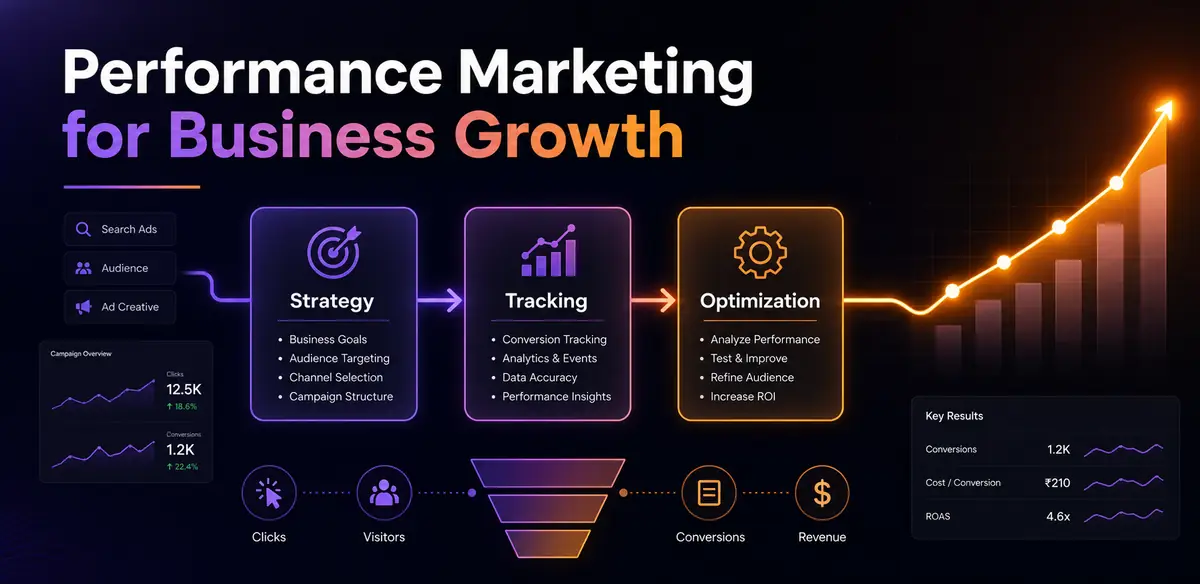
Performance Marketing for Business Growth
Learn how strategy, tracking, campaigns, landing pages, and optimization work together for measurable business outcomes.
Read Foundation Article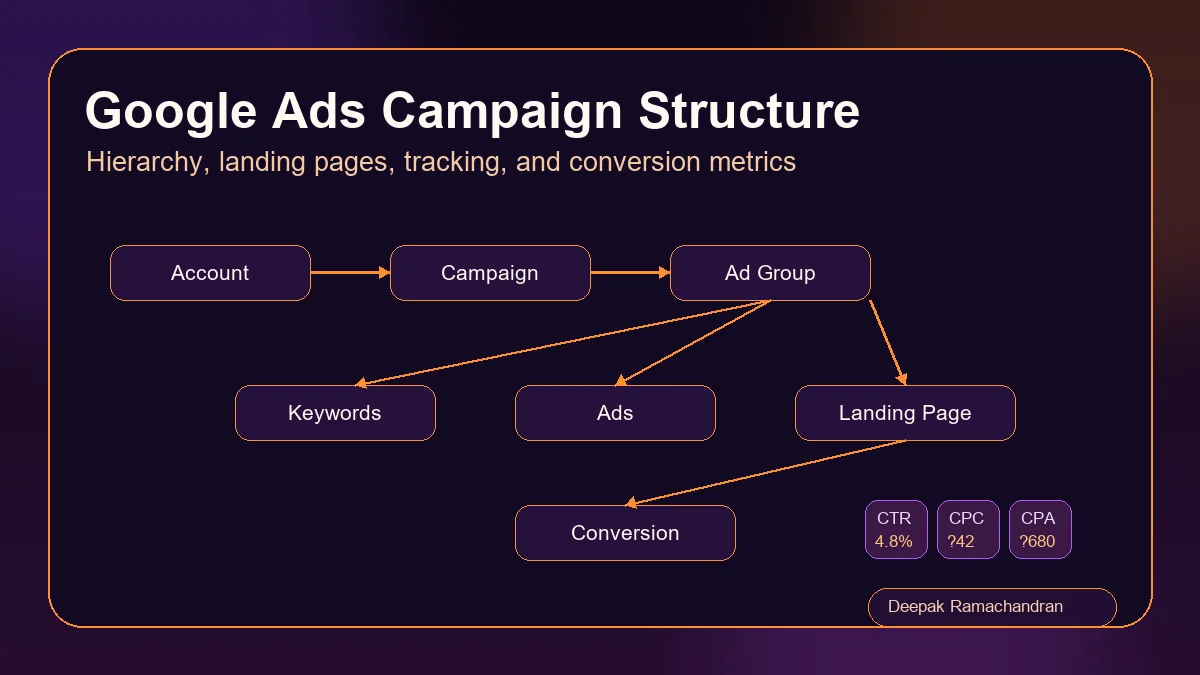 Google Ads
Google Ads Campaign Structure
Understand how campaigns, ad groups, keywords, ads, landing pages, tracking, and conversion goals are organized.
Read Article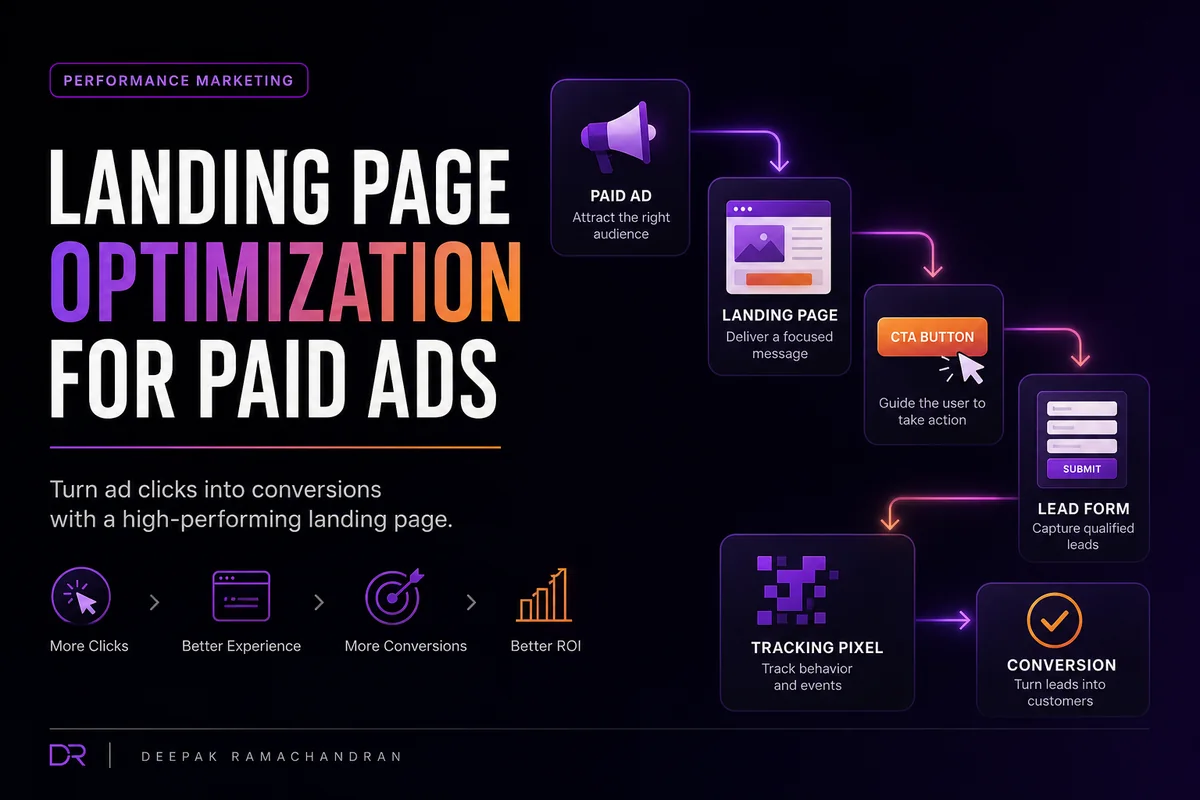 Performance Marketing
Landing Page Optimization for Paid Ads
Improve paid ads landing pages with message match, CTA clarity, form quality, trust signals, tracking, and CRO thinking.
Read Article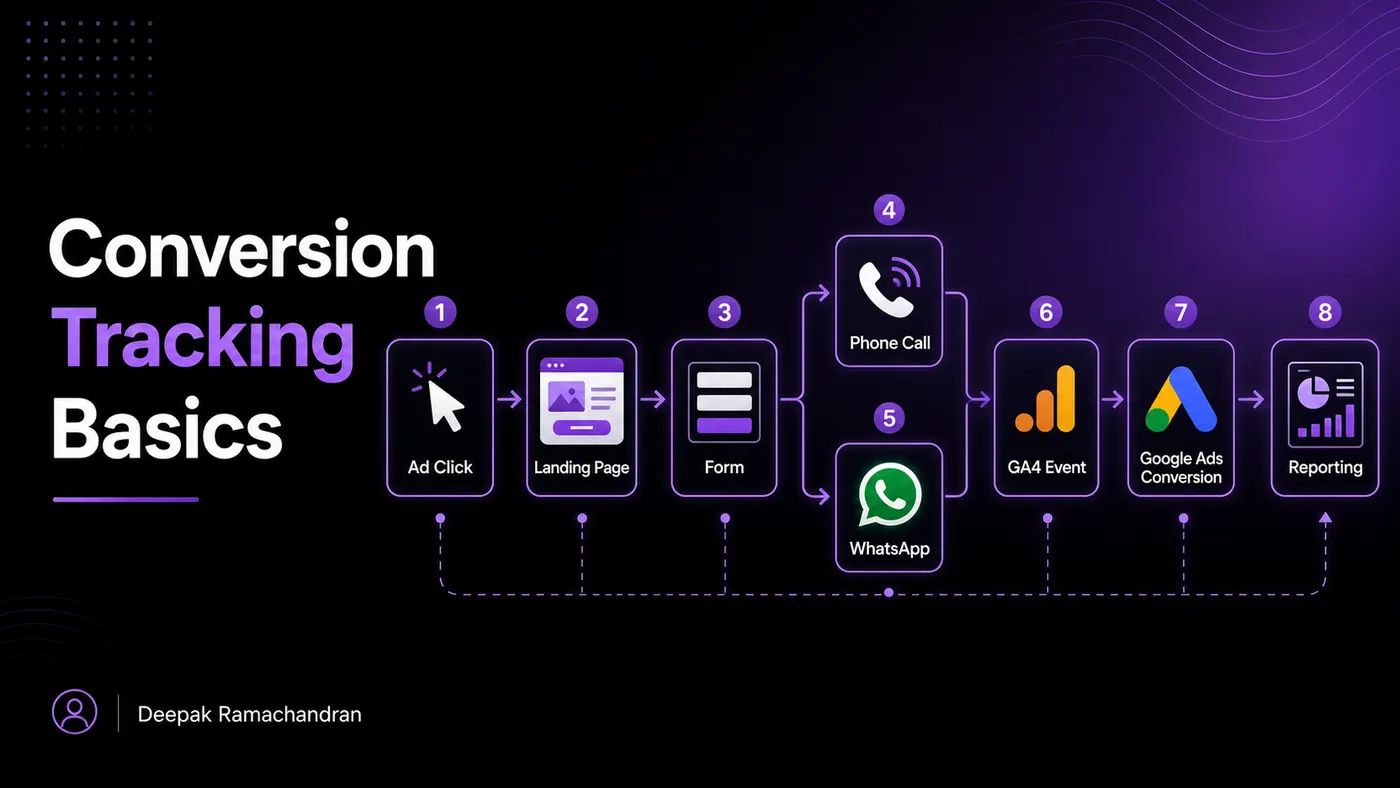 Performance Marketing
Conversion Tracking Basics
Learn how forms, calls, WhatsApp clicks, GA4 events, ad-platform conversions, UTMs, testing, and reporting support campaign decisions.
Read ArticleExplore Performance Marketing Resources
Use the Performance Marketing Resource Hub to choose another topic, continue to a focused article for implementation detail, or explore the Services and Contact page when the discussion relates to a real campaign, website, tracking setup, landing page, budget, or business objective.