A strong brand is not built by posting whenever there is free time. It is built through clarity, consistency, audience understanding, useful content, and repeated trust signals. That is why Social Media Marketing Strategy matters.
Many businesses and personal brands treat social media like a notice board. They post festival creatives, random offers, trending reels, motivational quotes, behind-the-scenes photos, and occasional updates without a clear direction. Some posts may get reach. Some may get likes. But random posting rarely builds a strong brand.
Social media works better when every post has a role. Some posts create awareness. Some educate the audience. Some build trust. Some show proof. Some start conversations. Some guide users toward a website, enquiry, service page, or professional profile.
This is why the Social Media Marketing Resource Hub on this website focuses on practical social media systems, content planning, brand positioning, profile optimization, and performance measurement instead of treating social media as casual posting.
What is a social media marketing strategy? A social media marketing strategy is a documented plan that connects audience understanding, content pillars, platform choice, publishing rhythm, creative formats, engagement and measurement. It gives social media work a business purpose so posts are not random updates, but part of a repeatable communication system that builds clarity, trust and useful visibility.
Why does random posting fail to build a brand?
Random posting fails because each post is disconnected from the audience, message and business goal. Without a clear pattern, users do not understand what the brand stands for or why they should keep paying attention.
What should a social media strategy include?
A social media strategy should include audience definition, content pillars, platform priorities, posting frequency, creative formats, engagement approach, CTAs and review metrics. These elements help the brand publish with consistency instead of reacting every day without direction.
How does a content strategy support business goals?
A content strategy supports business goals by turning broad objectives into repeatable topics, formats and calls to action. It helps content educate, build trust, create demand and guide users toward website visits, enquiries or deeper brand engagement.
- Random Posting
- Unclear Audience
- Mixed Messages
- Strategy-Led Topics
- Consistent Publishing
- Measurement
This original visual is provided as readable HTML so users and search systems can understand the full process without relying only on an image.
Related reading and topical path
This article connects to its hub, guide and related supporting articles.
- /social-media-marketing-resource-hub/
- /social-media-marketing-guide/
- /social-media-content-calendar/
- /social-media-metrics/
Written by Deepak Ramachandran
Reviewed/updated: June 16, 2026
Table of Contents
What Is a Social Media Marketing Strategy?
A social media marketing strategy is a structured plan for using social media platforms to support brand visibility, audience engagement, trust building, and business goals. The Social Media Marketing Guide explains how this wider system supports digital visibility.
It includes audience understanding, content creation, platform planning, and business goals. The Meta social media marketing lesson is a useful official resource for understanding business social media setup and audience-focused content.
It answers important questions such as:
- Who is the audience?
- What does the brand want to be known for?
- Which platforms matter most?
- What content should be posted?
- How often should content be published?
- What type of engagement should be encouraged?
- Which metrics should be tracked?
- How does social media connect to website visits, leads, enquiries, or professional opportunities?
A strategy is not only a content calendar. A calendar decides when content goes live. A strategy decides why the content exists in the first place.
For a business or professional brand, social media should not feel random. It should show a clear pattern of expertise, values, communication style, and audience relevance.
Why Random Posting Does Not Build a Brand
Random posting may create activity, but activity is not the same as strategy.
A brand needs repeated signals. People should be able to visit a profile and quickly understand what the brand stands for, who it helps, what topics it covers, and why it is worth following or trusting.
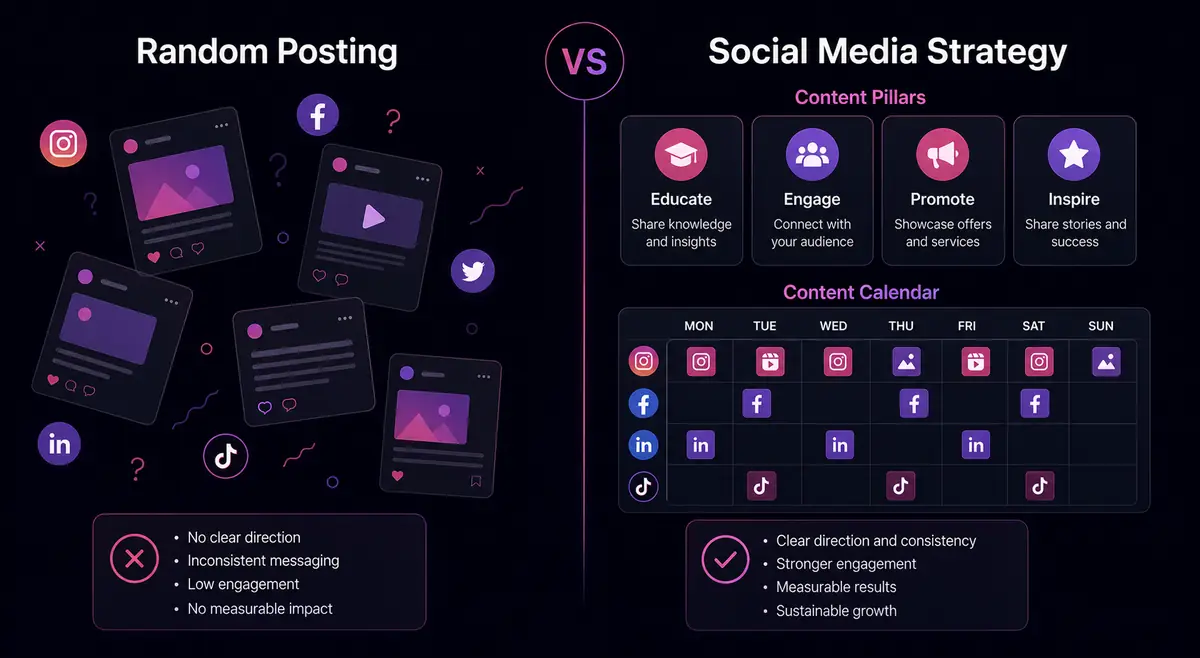
Random posting lacks direction
When content is posted without a clear strategy, the audience receives mixed signals.
One week the page may post product offers. The next week it may post memes. Then it may go silent. Then it may post a festival creative. Then it may suddenly post an educational carousel.
This makes it difficult for the audience to understand the brand.
A strong Social Media Marketing Strategy gives direction to content. It defines the themes, tone, message, platform role, and business purpose behind posting.
Inconsistent content weakens trust
Trust is built through consistency. Consistency does not mean posting every day without purpose. It means showing up with a recognizable message, useful content, and a clear brand identity.
For example, a professional digital marketing brand should not post disconnected content every week. It should create a consistent pattern around topics such as SEO, social media marketing, paid ads, analytics, content systems, website optimization, and business growth.
When users see consistent themes, they start associating the brand with specific expertise.
Vanity metrics do not equal brand growth
Likes, views, and followers can be useful signals. But they are not enough by themselves.
A post may get many views and still bring no trust, no profile visits, no website clicks, no enquiries, and no meaningful audience relationship.
From a practical marketing perspective, better questions are:
- Did the right audience see the content?
- Did the content improve brand understanding?
- Did users engage with the message?
- Did the post support a larger content theme?
- Did it lead users toward the next step?
- Did it strengthen positioning?
Social media strategy should measure quality, not only activity.
How Social Media Strategy Supports Brand Building
A proper strategy turns social media from random posting into a brand-building system.
It defines the audience
Before creating content, a brand must understand who the content is for.
For example, a local business may target customers in a specific city. A professional personal brand may target recruiters, business owners, peers, or industry connections. A service provider may target people with specific problems.
Audience clarity affects:
- Content topics
- Language style
- Visual format
- Platform choice
- Posting frequency
- Call-to-action
- Content depth
- Engagement approach
Without audience clarity, content becomes generic.
It creates content consistency
Content consistency helps people remember a brand. This can be done through content pillars. Content pillars are the main themes a brand repeatedly talks about. A practical social media content calendar helps organize these themes into a repeatable publishing system.
For a digital marketing professional, content pillars may include:
- SEO implementation
- Social media strategy
- Paid ads and performance marketing
- Website optimization
- Analytics and reporting
- Case studies or practical breakdowns
- Business growth observations
A strong content pillar system prevents random posting. It also makes content planning easier because every post connects to a larger theme.
It improves message clarity
A brand should not confuse users.
When someone visits a social media profile, they should quickly understand:
- What the brand does
- Who the content is for
- What topics are covered
- What value the audience can expect
- What action they can take next
This is why profile optimization is part of social media strategy. The bio, headline, profile image, featured links, highlights, pinned posts, and content themes should all support the same positioning.
It connects content with business goals
Social media should support a larger business or professional goal. For a business, this may include enquiries, store visits, lead generation, website traffic, brand awareness, or customer education.
For a professional brand, this may include recruiter visibility, networking, portfolio traffic, authority building, and inbound opportunities.
A content strategy should connect posts with clear goals. Not every post needs to sell. But every post should support awareness, trust, engagement, education, positioning, or conversion in some way.
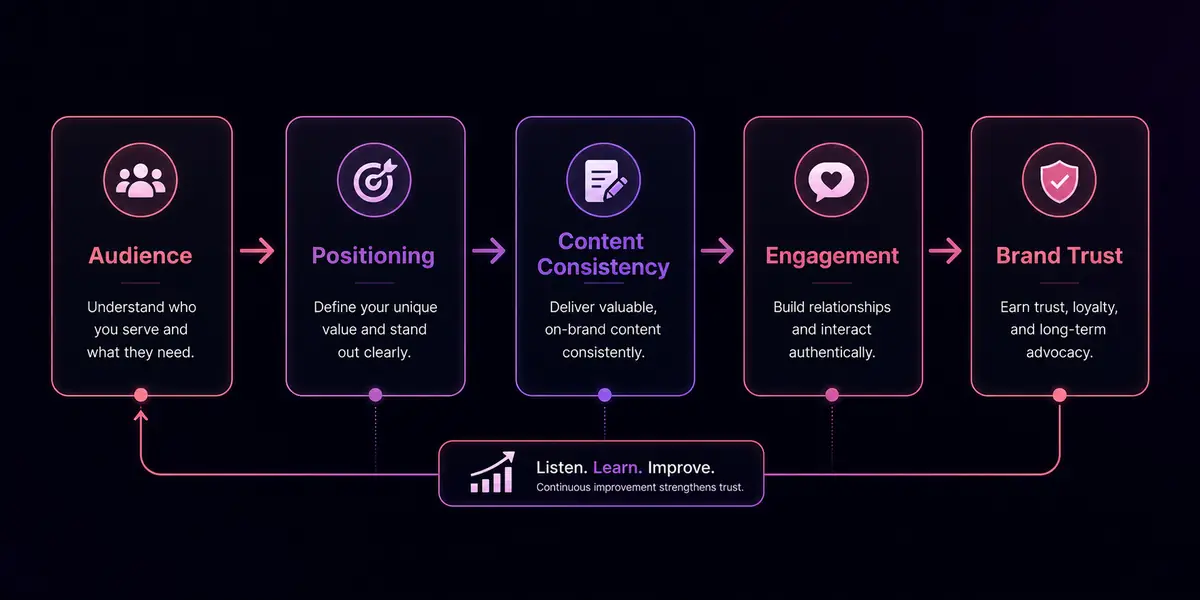
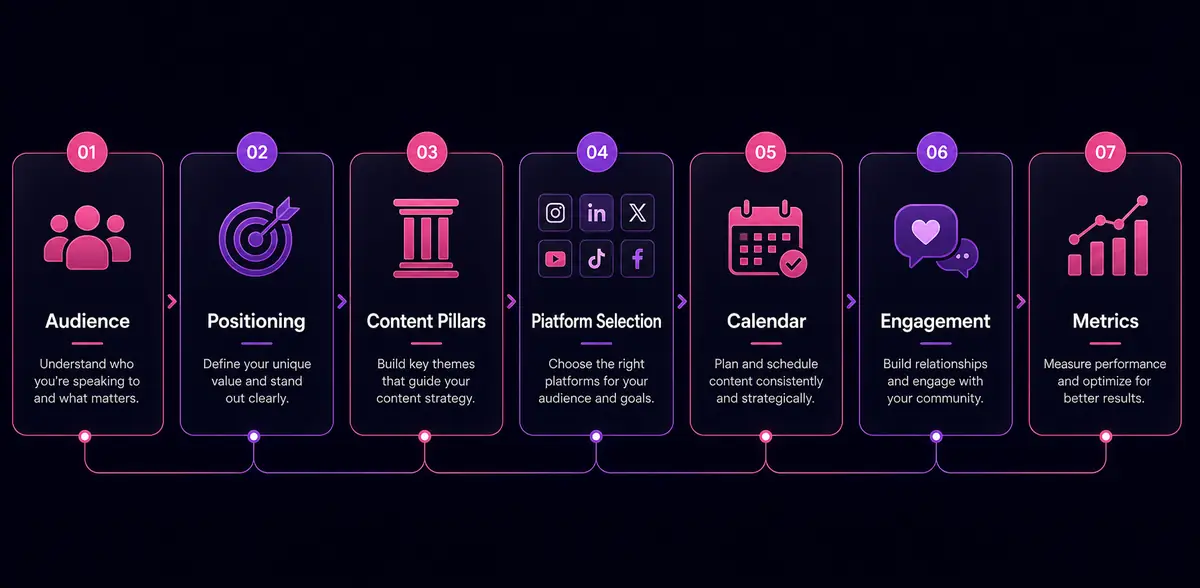
Core Elements of a Strong Social Media Marketing Strategy
A strong Social Media Marketing Strategy is built with connected parts. These parts make social media easier to plan, execute, review, and improve.
Audience understanding
Audience understanding is the foundation. A brand should know:
- Who the audience is
- What problems they have
- What content they care about
- Which platforms they use
- What objections they may have
- What level of awareness they are in
- What action they may take next
Content becomes stronger when it is written for a specific audience instead of everyone.
Brand positioning
Brand positioning defines how the brand should be remembered. For example, a brand can position itself as premium, local, educational, practical, creative, analytical, affordable, expert-led, or community-focused.
Positioning should be visible through:
- Bio
- Visual style
- Topics
- Captions
- Content format
- Proof points
- Tone of voice
- Call-to-action
- Website connection
Without positioning, social media becomes just another content feed.
Content pillars
Content pillars create structure. Instead of asking what should we post today, a brand can build content around fixed themes:
- Educational posts
- Problem-solution posts
- Behind-the-scenes posts
- Case study posts
- FAQ posts
- Opinion posts
- Proof-of-work posts
- Offer or service posts
This system helps balance value, trust, visibility, and conversion.
Platform selection
Every platform does not work the same way. Instagram may work well for visual storytelling, local visibility, reels, personal brands, and lifestyle-friendly content. LinkedIn may work better for professional positioning, B2B networking, hiring visibility, industry insights, and thought-led content.
A business does not need to be active everywhere with the same effort. It needs to choose platforms based on audience, content strength, business goal, and available resources.
Content calendar
A content calendar turns strategy into execution. It helps plan:
- Posting dates
- Content topics
- Captions
- Visual format
- Platform
- CTA
- Hashtags
- Campaign themes
- Content status
- Repurposing ideas
A calendar also prevents last-minute posting. It helps the brand stay consistent without depending only on mood or urgency.
Engagement system
Social media is not only publishing. It also includes interaction. A simple engagement system may include:
- Replying to comments
- Responding to DMs
- Commenting on relevant posts
- Asking meaningful questions
- Saving useful audience questions
- Turning repeated questions into content
- Tracking common objections
Engagement gives social media a human layer. It also helps identify what the audience actually cares about.
Performance measurement
Social media performance should be measured based on goals. A practical social media metrics system helps decide what to review and what to improve.
Important metrics may include:
- Reach
- Impressions
- Engagement rate
- Saves
- Shares
- Profile visits
- Link clicks
- Follower quality
- DM enquiries
- Website visits
- Leads or conversions
- Content topic performance
Metrics should guide decisions. If educational posts get saves, they may be useful. If proof posts create profile visits, they may support trust. If CTA posts drive link clicks, they may support conversion.
Practical Social Media Strategy Workflow
A practical workflow helps turn ideas into a clear system. Here is a simple Social Media Marketing Strategy workflow:
- Define the brand goal
- Identify the target audience
- Clarify brand positioning
- Choose primary platforms
- Select 3-5 content pillars
- Create a monthly content calendar
- Prepare content formats for each platform
- Optimize profile bio, links, and highlights
- Publish consistently
- Engage with relevant audience members
- Track important metrics
- Review best-performing content
- Repurpose strong ideas
- Improve weak content formats
- Connect social media with website, portfolio, or enquiry pages
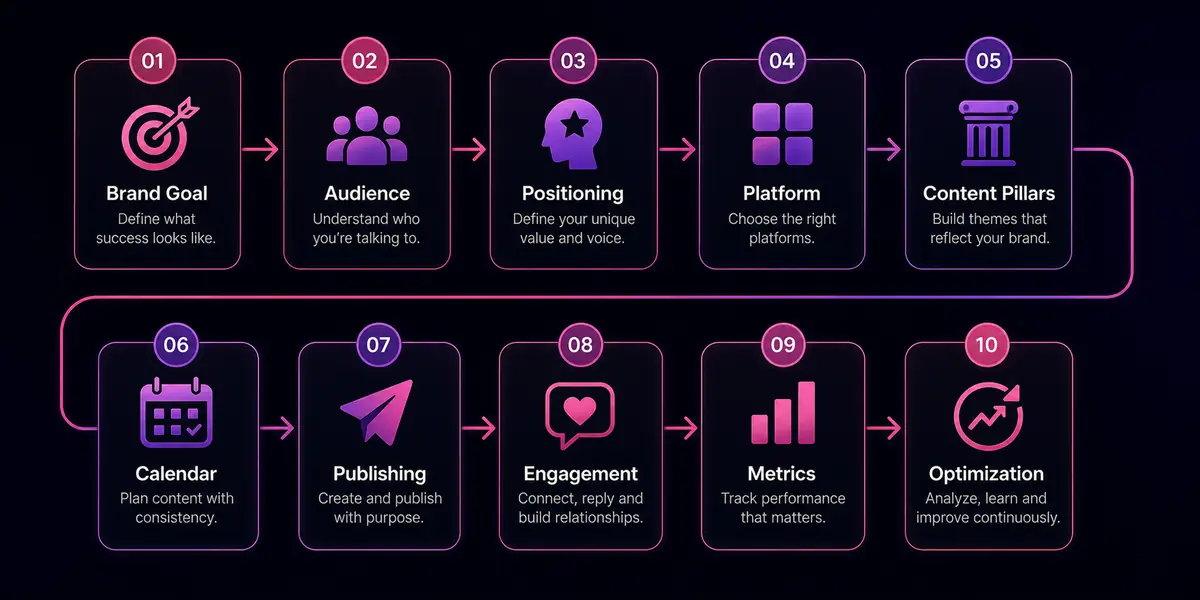
This workflow keeps social media practical. It avoids the common mistake of creating content without direction.
Common Social Media Marketing Mistakes
Many brands struggle on social media because they focus on posting instead of strategy.
- Posting without clear goals
- Copying trends without brand relevance
- Using the same content on every platform
- Ignoring audience problems
- Not optimizing the profile
- Posting only promotional content
- Posting only motivational content
- Not using content pillars
- Not planning a content calendar
- Ignoring comments and DMs
- Measuring only likes and followers
- Changing strategy too quickly
- Not connecting social media with website or business goals
- Using unclear calls to action
- Publishing inconsistent visual styles
One major mistake is treating social media as a separate activity. In real digital marketing workflows, social media should connect with website content, SEO, paid campaigns, analytics, and conversion paths.
Example: Social Media Strategy for a Professional Brand
Consider a professional digital marketing brand. The goal may be to build trust, attract recruiters, show practical implementation, and drive users to a portfolio website.
A simple strategy could look like this:
- Primary audience: Recruiters, business owners, marketers, peers
- Primary platforms: LinkedIn and Instagram
- Content pillars: SEO, SMM, paid ads, analytics, website optimization
- Content format: Carousels, text posts, short videos, screenshots, practical breakdowns
- CTA: Profile visit, website visit, comment, DM, contact page
- Metrics: Profile views, impressions, saves, meaningful comments, website clicks
In this example, social media is not used for random visibility. It is used as a positioning system.
A LinkedIn post may explain a practical SEO insight. An Instagram carousel may simplify a social media checklist. A website blog may provide the deeper version of the same topic. A portfolio page may show the full professional context. A future LinkedIn content system guide can connect these ideas in more detail.
This is how social media, content, and website strategy can work together.
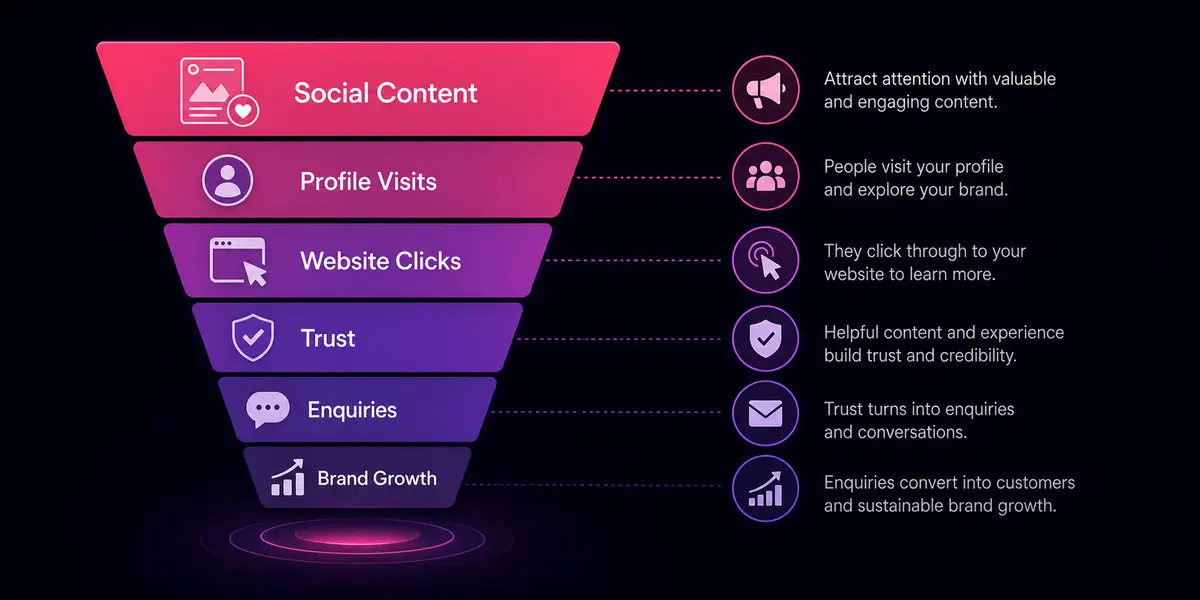
Social Media Strategy Is Not Just Content Posting
Content posting is only one part of social media strategy. A complete system includes:
- Audience research
- Brand positioning
- Profile optimization
- Content pillars
- Content calendar
- Caption strategy
- Visual consistency
- Engagement plan
- Platform selection
- Analytics review
- CTA planning
- Repurposing system
- Website connection
A brand that posts randomly may stay active, but a brand with strategy becomes easier to recognize, trust, and remember.
Social Media Marketing Strategy works because it gives every post a job. Some posts attract attention. Some educate. Some build credibility. Some create conversations. Some guide users toward action.
When these parts work together, social media becomes a long-term brand-building system instead of a daily posting burden.
For platform-specific professional positioning, a LinkedIn content system helps turn social media strategy into proof-of-work posts, content pillars and measurable professional visibility.
A practical social media content strategy example shows how positioning, audience, platform roles, pillars, CTAs and measurement can replace random posting.
Conclusion
Social Media Marketing Strategy matters because random posting does not build a strong brand.
A brand needs clear audience understanding, consistent content pillars, strong positioning, optimized profiles, a practical content calendar, useful engagement, and meaningful performance measurement.
Posting more is not always the answer. Posting with better direction is.
For businesses and professional brands, social media should support visibility, trust, communication, and business growth. It should connect with the website, content strategy, SEO, paid campaigns, and conversion goals.
The strongest social media systems are not built from random trends. They are built from clarity, consistency, audience relevance, and continuous improvement.
Continue Reading
FAQ Section
What is a Social Media Marketing Strategy?
A Social Media Marketing Strategy is a structured plan for using social media platforms to build visibility, reach the right audience, improve engagement, strengthen brand trust, and support business or professional goals.
Why is random posting bad for social media growth?
Random posting is weak because it lacks direction, consistency, audience understanding, and measurable goals. It may create activity, but it usually does not build strong positioning or long-term brand trust.
What should a social media strategy include?
A social media strategy should include audience research, brand positioning, platform selection, content pillars, content calendar, engagement plan, profile optimization, performance metrics, and clear calls to action.
How often should a brand post on social media?
Posting frequency depends on the platform, audience, content quality, and available resources. Consistency matters more than posting too much. A realistic content calendar is better than an aggressive schedule that cannot be maintained.
What are content pillars in social media?
Content pillars are the main themes a brand regularly creates content around. They help maintain consistency, avoid random posting, and make the brand easier to understand.
Which metrics matter in social media marketing?
Important metrics include reach, impressions, engagement rate, saves, shares, profile visits, link clicks, DM enquiries, website visits, and conversions. The best metrics depend on the brand’s goal.
Want to build a stronger social media presence with clear strategy instead of random posting?
Explore the Social Media Marketing Resource Hub for practical guides on content planning, profile optimization, social media metrics, and professional brand positioning.
For website, content, or digital marketing collaboration discussions, visit the Contact page.